
Zwierzyniec in the western part of Kraków is a former village that for centuries belonged to the Norbertine sisters and in the 20th century came within the city's boundaries. Behind it rises Las Wolski, a forest park with a zoo, nature reserves and a mound. History links the two places: the sisters were the owners of the village, and the forest became the city's property only in 1917. Below: where the Norbertine sisters came from, when Zwierzyniec joined Kraków and how the forest was turned into a park for residents.
The Norbertine sisters on the Rudawa: two founding dates
The Norbertine convent stands at Tadeusza Kościuszki 88, next to the Church of St Augustine and St John the Baptist. Wikipedia writes that together with the church it forms the largest historic complex in the city after Wawel Hill, but this is the assessment of the entry's authors and not data from the register.
The beginnings of the convent are described in different ways, because early records were lost. The sisters' website says that local chronicles burned a hundred years after the foundation, so the oldest history has to be reconstructed from legal acts and small notes. The sisters name two foundations. The first, ducal, of 1148, was said to be linked with Agnieszka, wife of Duke Władysław II, and with the Church of the Holy Saviour (Najświętszy Salwator), and the first nuns came from Doksany in Bohemia. The second, of 1162, was the foundation by Jaksa Gryfita on the Vistula at Zwierzyniec. The date 1162 is repeated by the Wikipedia entry on Zwierzyniec, which adds that the name “Zwierzyniec” appeared for the first time in the foundation document.
The entry on the convent church is more cautious. It says that no foundation documents exist and that the start of the convent can be placed around 1146, before the exile of Duke Władysław II. The entry links the role of Jaksa Gryfita with the year 1164, when he was said to have accepted the right of patronage over the nuns. The dates 1148, 1162 and 1164 therefore point to successive stages and not to one documented foundation.
The convent's fortunes were shaped by Tatar invasions and fires. The sisters' website gives the destruction of the wooden convent in 1241 and its rebuilding in 1259, while Wikipedia elsewhere lists invasions in 1241, 1259 and 1287 or 1242 and 1260. The church burned in 1527 and 1587. Its present appearance results from a rebuilding in 1596-1626, when the convent was ruled by Abbess Dorota Kątska, and according to the sisters' website the rebuilding lasted from 1600 to 1620. In 1636-1643 Kątska also founded a convent with the Church of St Norbert in the city centre, to which 20 sisters moved.
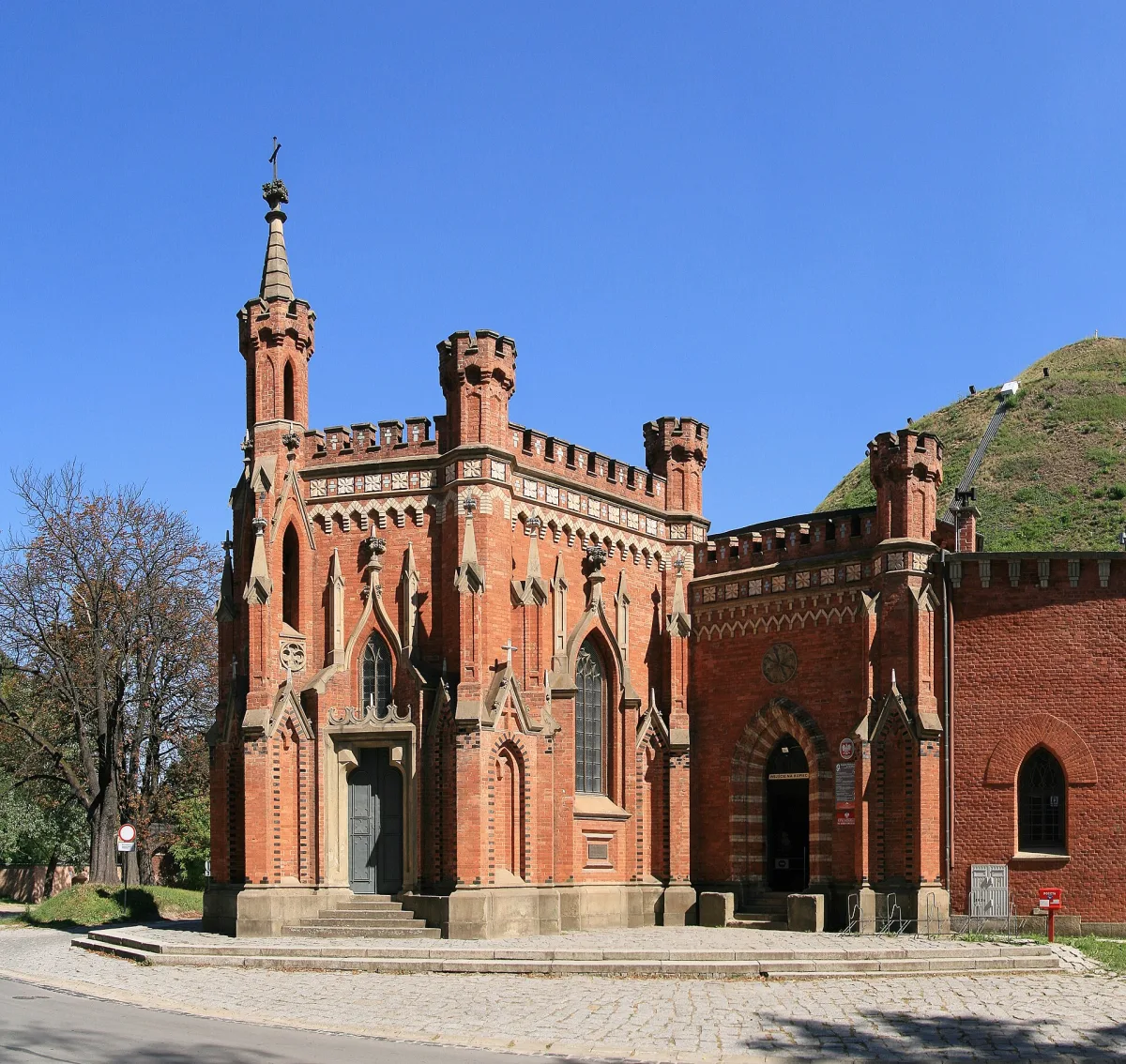
Kraków customs are tied to the convent. On Easter Monday the Emaus fair is held beside it, and in the octave of Corpus Christi the Lajkonik stops here. Separate articles describe both. There is also a figure associated with the sisters, Bronisława: the convent's website says she was born in 1203 or 1204, lived in the convent in 1220-1259 and was beatified in 1839 by Pope Gregory XVI. According to tradition she had a hermitage on the hill where Kościuszko Mound now stands. A chapel was built on this spot in 1702 and demolished in 1854 during the construction of the Austrian fortifications. The present Neo-Gothic Chapel of Blessed Bronisława was built in 1856-1861 to a design by Feliks Księżarski, and today the entrance to the mound leads through it.
Salwator and Zwierzyniec: from a village to a villa estate
On a small hill stands the Church of the Holy Saviour, from which the Salwator estate takes its name. The first mention of its consecration comes from the chronicle of the Kraków chapter of 1148, although the origins of the church are sometimes linked with much older structures. Next to it lies the Salwator Cemetery, and on św. Bronisławy street stands the wooden Chapel of St Margaret and St Judith from 1689-1690.
The name Zwierzyniec is sometimes linked with former hunting grounds for the ducal court, but Wikipedia notes that there is no evidence of designated hunting places. The oldest Latin record dates from the 13th century and the Polish one from 1422. The half-village of Zwierzyniec (Półwsie Zwierzynieckie) arose from a division of the village in 1327. According to Wikipedia's account of Zwierzyniec's history, the Błonia Meadow remained unbuilt pasture also because the Norbertine sisters were in dispute with the city over an exchange of land for a townhouse on Floriańska street. Today it is the Błonia.
In the mid-19th century the Austrians built a large fortress around Kościuszko Mound, and on Salwator hill in 1866-1867 the FS-30 redoubt. During the regulation of the Rudawa in 1903-1910 its mouth was moved and the Zwierzyniec mill, mentioned since 1254, was demolished. After the redoubts were dismantled, a villa estate was planned on the hill. The competition was won in 1909 by Tadeusz Niedzielski, but the design by Roman Bandurski was sent for realisation. The estate received the name Salwator in 1912; it has about 30 villas and is regarded as a symbol of the “garden city”.
Zwierzyniec became part of Kraków in 1909-1910, and the sources give different dates. The entry on the village says it was incorporated on 13 November 1909 as the 13th cadastral district. A study of the history of the city's administrative divisions explains that the act was adopted in 1909 and signed by the emperor, and came into force on 1 April 1910, when nine municipalities were annexed to Kraków, including Zwierzyniec and Półwsie Zwierzynieckie. The Norbertine sisters owned the village until 1910. According to the Austrian census of 1900, 2,976 people lived in Zwierzyniec. District VII Zwierzyniec was created in 1991.
Las Wolski: from forest to people's park and zoo
Las Wolski covers 419 ha and lies mostly in Wola Justowska. It grows on the hills of the Sowiniec Range, with the summit Sowiniec at 358 m above sea level. In 1917 the forest was bought by the Savings Bank of the City of Kraków and handed to the city for use as a people's park. The zoo's website speaks of a purchase from private hands under a City Council resolution of 19 July 1917. There are three nature reserves in the forest: Bielańskie Skałki from 1950, Panieńskie Skały from 1953 and Skałki Przegorzalskie from 1959. Climbing is prohibited in the first two. The network of paths is about 40 km long, and a section of the northern loop of the Kraków Fortress trail and the Two Mounds Trail (Szlak Dwóch Kopców) run through the forest.
The zoo, that is the Kraków Zoological Garden, opened on 6 July 1929 in the presence of President Ignacy Mościcki. It lies on Pustelnik hill. The idea came from activists of the Kraków branch of the Copernicus Society of Naturalists, among whom Wikipedia names the engineer Wincenty Wober and Kazimierz Maślankiewicz. On the day of opening, 94 mammals, 98 birds and 12 reptiles lived here. The first director was Antoni Koziarz, who ran the garden in 1929-1966. Earlier Kraków had only a menagerie on Wawel Hill. Nearby stands the Camaldolese monastery in Bielany, to which a separate article is devoted.
On Sowiniec stands Piłsudski Mound. Building of the mound began on 6 August 1934, on the 20th anniversary of the departure of the First Cadre Company, and was completed on 9 July 1937. It is about 35 metres high with a base diameter of 111 metres, and soil from First World War battlefields was placed in its interior. Wikipedia calls it the largest mound in Poland, although whether it or Kościuszko Mound is higher depends on the method of measurement.
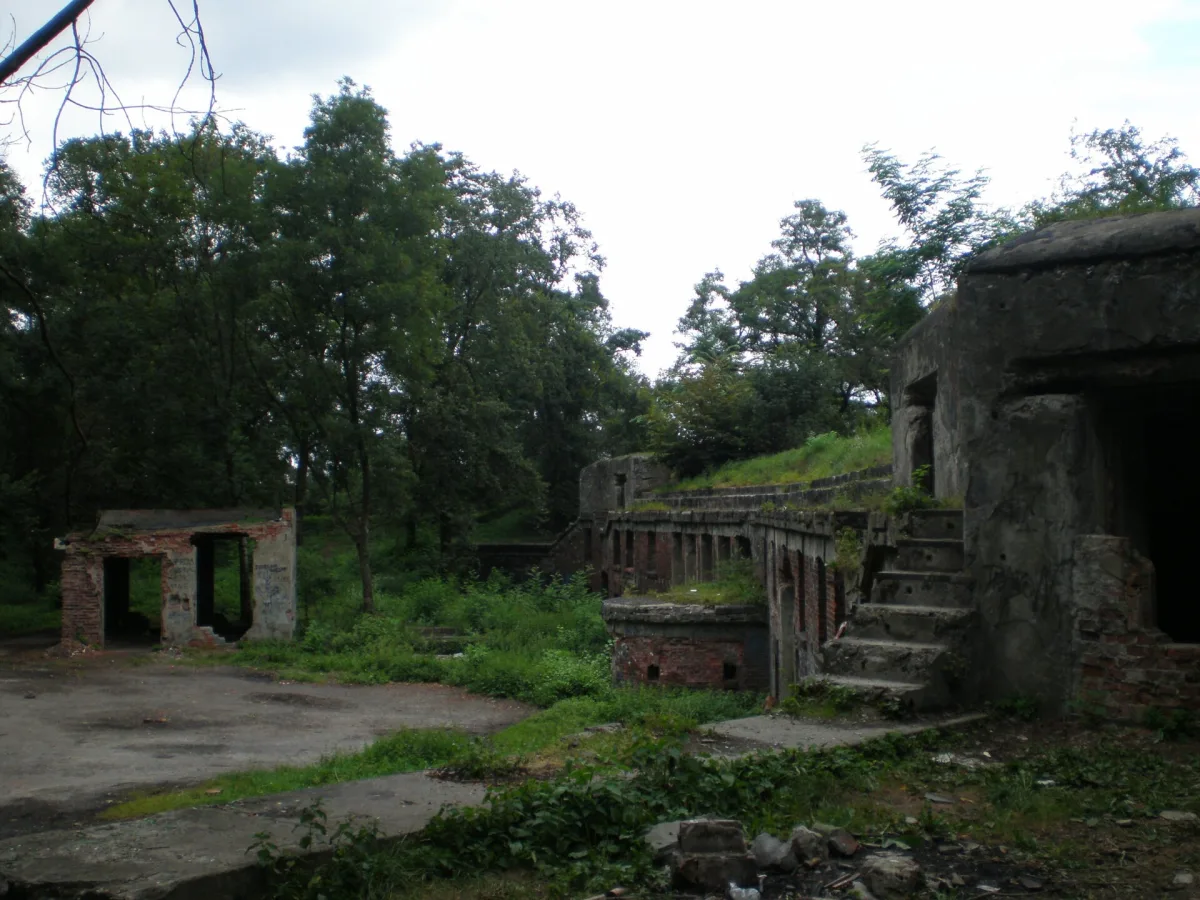
On the edge of the forest, in Przegorzały, stand Villa Baszta from 1928, designed by Adolf Szyszko-Bohusz, and the castle in Przegorzały, which was built during the Second World War. In the forest we also find the Okocim Pavilion from 1936. In the 1870s and 1880s a complex of Austrian artillery batteries was also built in Las Wolski, an element of the third ring of the Kraków Fortress.
Be the first! Add a comment.
You need to log in to add a comment.
Log in