
Preparations and the start of the operation
The plan for the operation was presented to the State Security Commission on 27 March 1947 by Gen. Stefan Mossor, deputy chief of the General Staff of the Polish Army. According to the dzieje.pl portal, the Political Bureau of the Polish Workers' Party approved it two days later and decided to set up the Vistula Operational Group, with preparations under way since the autumn of 1946. Wikipedia states that the resolution on the operation was adopted on 24 April by the Presidium of the Council of Ministers, and that the original code name was Wschód (East).
The day before the Political Bureau's decision, on 28 March, Gen. Karol Świerczewski, the deputy minister of national defence, was killed in a UPA ambush. The author of a text published by the Institute of National Remembrance (IPN) calls this event the impulse to intensify action against the UPA. The dzieje.pl portal, by contrast, writes that the general's death provided a pretext to justify the deportations and to apply the principle of collective responsibility to Ukrainians.
The deportation of the civilian population began on 28 April 1947. Nearly 20,000 soldiers were assigned to the operation. According to dzieje.pl it ended on 31 July 1947, while Wikipedia notes that the last deportations took place as late as 1950. The sources also differ on the name: the author of the IPN text writes of Operation Vistula, covering the military action against the UPA, while some historians, as he notes, use the term "action" and limit it to the resettlements alone. This article uses the name Operation Vistula.
Earlier, under the 1944 agreement with the Ukrainian SSR, more than 480,000 people were resettled to the Ukrainian SSR, as dzieje.pl reports. Operation Vistula concerned those who remained, including the Lemkos.
Overall figures and the breakdown by voivodeship
According to General Staff data quoted by dzieje.pl, 140,575 people were deported: Ukrainians, Lemkos and members of mixed families. The IPN text gives the same figure and breaks it down by the voivodeships of the time: 10,510 people from the Kraków voivodeship, 85,339 from Rzeszów and 44,726 from Lublin. According to dzieje.pl, people had 2-3 hours to leave their homes and could take 25 kilograms of luggage. Wikipedia gives two hours and the same limit. They were settled in the north and west of the country, in dispersion.
When reading the figures for Lesser Poland (Małopolska), the 1947 boundaries have to be kept in mind. According to Wikipedia, Gorlice County belonged in 1945-1975 to the Rzeszów voivodeship, so its inhabitants are included in the figure of 85,339, not in 10,510. The sources used here do not break the figure of 10,510 down by county.
Gorlice County: 52 villages and differing figures
The fullest summary for Gorlice County comes from an article in the "Gazeta Gorlicka" of May 1997, available on the lemko.org site. Its author states that the deportations in the county took place on three dates: 25-31 May, 11-15 June and 26-30 June 1947, and that people left from loading stations in Zagórzany and Gorlice. They covered 52 villages and, according to this text, 14,096 people. The author adds, however, that other lists give 11,329. This is a discrepancy we cannot resolve, so we give both figures.
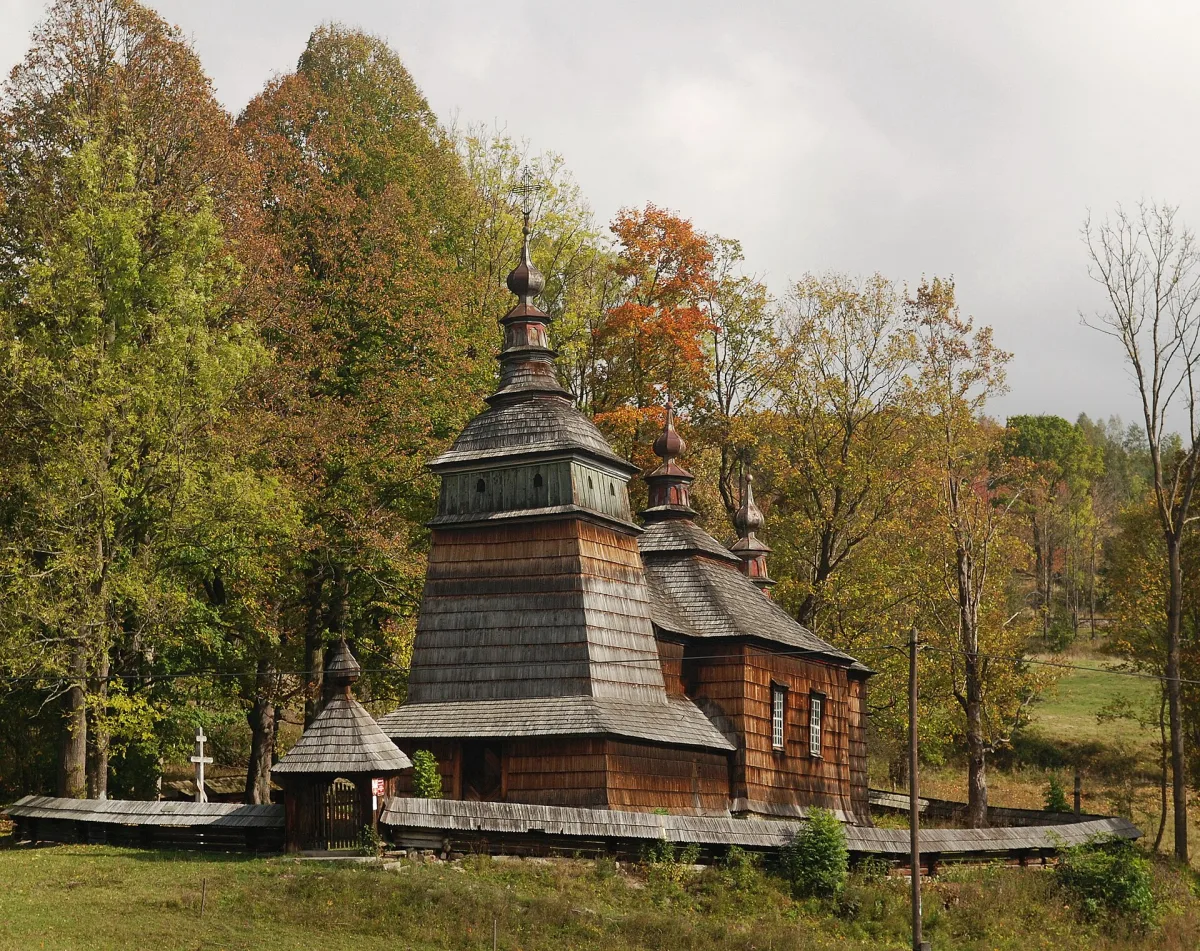
The same text lists villages from which almost the entire population left, among them Bieliczna, Bodaki, Gładyszów, Izby, Krzywa, Małastów, Nowica, Regetów, Smerekowiec and Zdynia. According to it, the village of Bartne was deported on the first date, and of the 472 people in the village, 18 remained. These are data from a single source. In its entry on the Low Beskids, Wikipedia lists Bieliczna and Regetów among the valleys that remained completely empty after the deportations. Bartne itself is covered separately in the article on the village of stonemasons and bee-keepers. The tserkva in Bartne, according to the site's entry, ceased to be active after 1947 and, after renovation in 1968-1970, serves as a museum, a branch of the Gorlice museum.
The Sądecczyzna: Powroźnik and Szczawnik
For Nowy Sącz County we have only isolated data from entries on individual villages. Wikipedia states that 451 people were deported from Powroźnik in 1947, with the exception of mixed families and people considered deserving, for example Lemko couriers. In their place came highlanders from the Łącko and Kamienica areas and from the vicinity of Piwniczna and Rytro. In its entry on Szczawnik, Wikipedia records that until 1947 the Lemko population predominated there and that it left the village precisely in connection with Operation Vistula. The deportation of Ruś Szlachtowska in the Pieniny is covered in a separate article.
The camp in Jaworzno
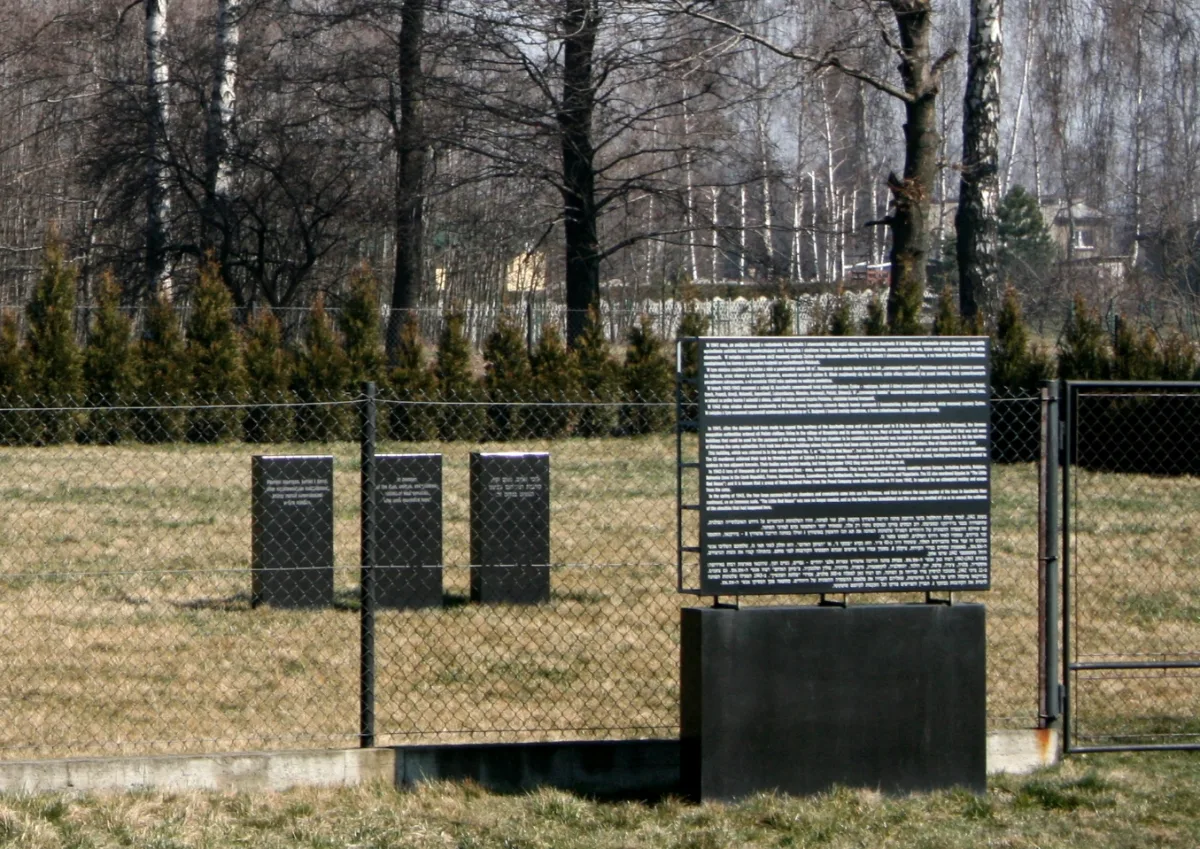
People suspected of cooperating with the UPA were sent from assembly points to detention, and some to the Central Labour Camp in Jaworzno. Jaworzno is today in the Silesian Voivodeship, but the camp was subordinate, as Wikipedia states, to the Voivodeship Office of Public Security in Kraków. The Political Bureau took the decision to send deportees there on 23 April 1947, and the first transport, 16 people from Sanok, arrived on 4 May.
The numbers of inmates are similar but not identical. The IPN text gives 3,871 people, Wikipedia 3,873, including 2,781 Ukrainians and 823 women. The author of the IPN text notes that the inmates included Ukrainians, Lemkos and Poles. Dzieje.pl writes of nearly 4,000 people, including more than 800 women, and of 161 deaths. Wikipedia gives 162 deaths in its entry on the camp, more than 150 in its entry on the operation, and the text from "Gazeta Gorlicka" 170. The name also varies: officially it was a Central Labour Camp, dzieje.pl calls it a concentration camp, and the author of the IPN text observes that the inmates had the status of people held in temporary detention.
The site had earlier been a German subcamp of KL Auschwitz, Neu-Dachs. A draft resolution of a Sejm committee from 2012 speaks of harsh conditions in the camp and of some people being held without proof of guilt.
Returns after 1956
For decades the deportees could not return, as dzieje.pl writes. The possibility of return appeared after the political thaw of 1956. According to Wikipedia's entry on the Lemkos, returns were not on a mass scale: estimates put them at between 3 and 10 per cent of those deported. The author of the "Gazeta Gorlicka" text writes that about 2,000 people returned to Gorlice County in 1956-1958, without ownership rights to the property left behind, which under a decree of 27 July 1949 had been taken over by the State Treasury. Many bought back their former farms from the new owners. In 1956 Orthodox liturgical life was restored in Bartne and Wysowa.
Today the former Lemko village is recalled by museums, among them the homestead in Gładyszów, a village from the list of those from which almost the entire population left.
Assessments after 1989
According to Wikipedia, the Senate of the Republic of Poland condemned the operation in 1990, and in 2002 President Aleksander Kwaśniewski expressed regret. In 2007 the presidents of Poland and Ukraine, in a joint statement, recognised the operation as contrary to fundamental human rights. In December 2012 the Sejm Committee on National and Ethnic Minorities adopted a draft resolution condemning the operation, pointing to the principle of collective responsibility, but the committee received both letters supporting the draft and letters condemning it.
Historians assess the operation in different ways. The IPN text summarises three positions: some researchers regard it as an action taken out of overriding necessity against the UPA, some hold that eliminating the guerrilla force was necessary but could have been achieved without resettling the civilian population, and others believe that the aim was to create an ethnically homogeneous Poland. Dzieje.pl quotes Tadeusz A. Olszański, who considers the elimination of the Ukrainian guerrilla force necessary but does not regard the methods used, including deportation, as justified.
Be the first! Add a comment.
You need to log in to add a comment.
Log in