
From the autumn of 1941 the Germans confined the Jewish population of Lesser Poland's towns in ghettos. Some of the ghettos were transitional: people were taken from them to labour camps or to Auschwitz-Birkenau. We list those about which the sources allow a reliable account: Tarnów, Wadowice, Olkusz, Chrzanów and Andrychów, as well as what is known about Krzeszowice. Dates and figures are given with attribution, because they differ in the literature.
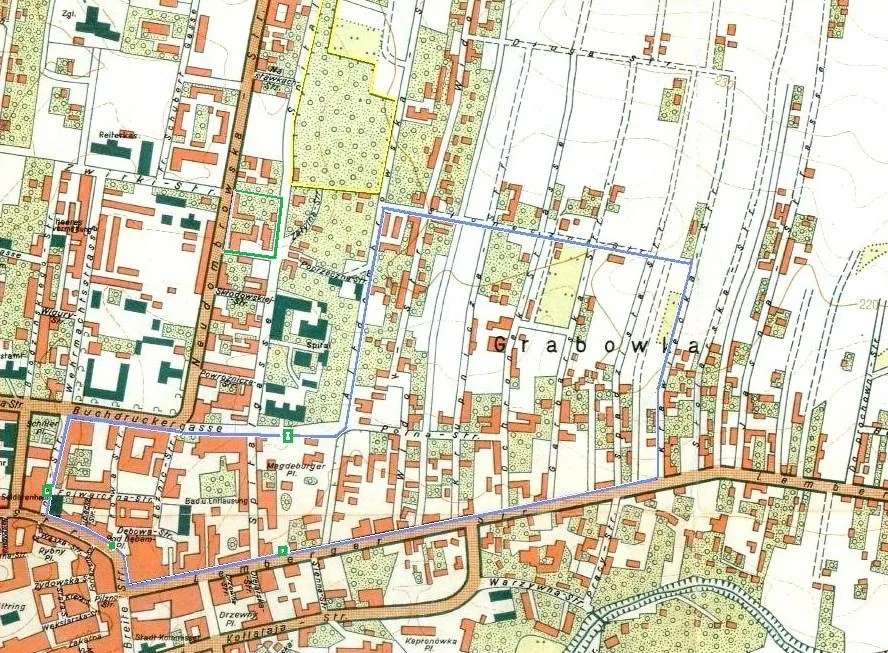
Tarnów: the ghetto in the Grabówka district
According to Wikipedia, based on historical literature, in March 1941 the Jews of Krakowska and Wałowa streets were moved to a separate district in the eastern part of the city, mainly to Grabówka. The number of Jews in Tarnów then rose from 25 to 40 thousand, through the forced relocation of residents of surrounding villages and small towns. The fenced ghetto was established on 19 June 1942. Liquidation began on 2 September 1943, when Amon Göth, commandant of the camp in Płaszów, arrived in the city. The city was declared “free of Jews” on 9 February 1944. Figures for the victims differ between publications, so we do not give a single value.
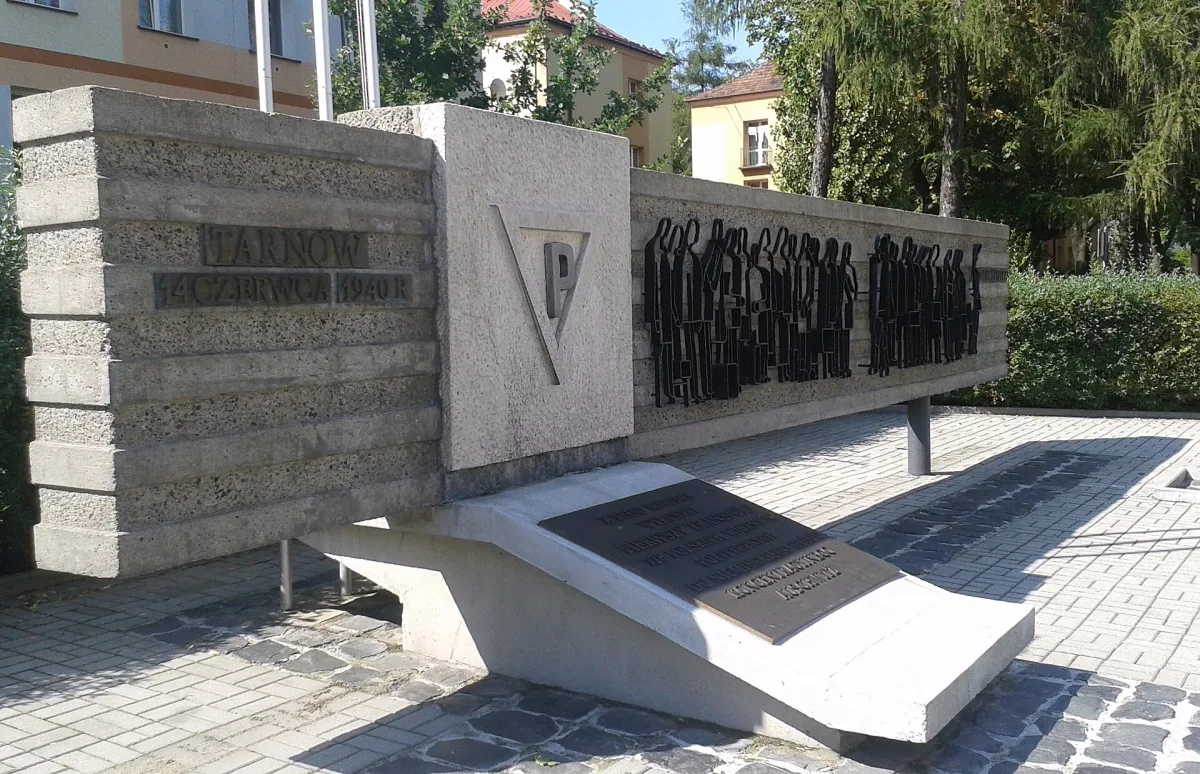
Traces of the former district are described in the entry on the Tarnów ghetto. Linked with the same area are the monument to the First Transport of Prisoners to KL Auschwitz, which we cover in a separate text, and the site of the New Synagogue, burnt down in 1939. Since 1995 the city has held Galician Jewish Remembrance Days in mid-June, organised among others by the Tarnów Land Museum.
Wadowice: from July 1942 to August 1943
The ghetto in Wadowice was established on 3 July 1942, shortly after the first deportation of Wadowice's Jews to an extermination camp. It was set in the poorest part of the town, around Mydlarska, Kręta, Piaskowa and Marcin Wadowita streets and the western side of Zatorska Street. It was liquidated on 10 August 1943. According to Wikipedia, nearly 1,400 of its residents were deported to Auschwitz-Birkenau, and about 170 of Wadowice's Jews survived the war, including eleven people who hid in Wadowice itself. It is also known that, according to accounts, an open ghetto operated in the town from 1941.
The figures for the pre-war community are not consistent. A bilingual plaque from 1989, placed on the site of the synagogue in Wadowice, commemorates about two thousand Jews from the town, while the “Encyclopedia of Camps and Ghettos” gives about 1,400 people at the start of the occupation. The ghetto itself is covered in a separate entry on the Wadowice ghetto.
Olkusz: from September 1941 to June 1942
According to Wikipedia, in 1937 Olkusz had 2,700 Jewish residents. The ghetto was established in September 1941 in the north-eastern part of the town and in the villages of Sikorka, Parcze and Słowiki, now parts of Olkusz. The resettlement lasted ten days, and Poles were expelled from the houses within its boundaries. The ghetto was not fenced, but German and Jewish policemen guarded the entrances. A communal kitchen, a hospital and a nursery for about thirty children operated in it. The official daily bread ration was 250-300 grams.
Liquidation began on the night of 9 to 10 June 1942. In less than a day about 3,400 people were gathered, of whom about 200 were judged fit for work. The rest were deported in transports on 13 and 15 June, about three thousand people in all. Wikipedia states that most were murdered in gas chambers, most probably in Auschwitz II-Birkenau, but researchers do not agree on this. The memory of the community is preserved by the entry on the Olkusz ghetto and the old Jewish cemetery on Kolorowa Street, heavily damaged since the war.
Chrzanów: the largest of these ghettos
Before the war, according to Wikipedia, Jews made up nearly 40 per cent of Chrzanów's residents. The ghetto was established in November 1941. In May 1942, after the resettlement of about a thousand people from neighbouring towns, it held, according to Wikipedia, 8,631 people. At the end of May 1942, over six days, nearly three thousand people were deported to Auschwitz or to labour camps. On 8 July, after a selection, about 1,500 people were placed in a school building and deported to Auschwitz the following day. The final liquidation took place on 18 February 1943: the elderly and children were sent to Auschwitz, and the young and those fit for work were taken to forced labour in the Reich. Wikipedia states that about 10 per cent of Chrzanów's Jews survived the war, mainly people from the labour camps.
In April 1942, on Krzyski Square, at the junction of today's Grunwaldzka and Świętokrzyska streets, the Germans publicly hanged seven men. The site is marked by a monument. The Great Synagogue stood on the corner of Krakowska and Garncarska streets and was demolished in 1973; its former site is described in the entry on the synagogue in Chrzanów.
Andrychów and Krzeszowice
The ghetto in Andrychów was established on 26 September 1941, in the triangle of Szewska, Brzegi and Koświcki streets. It was of a rotational nature: Jews from surrounding towns, among them Biała, Kęty and Żywiec, were brought into it before being deported to camps. It was intended for about 300 people, although the Wikipedia entry on the town speaks of about a thousand. According to the chronology in the entry on the ghetto, a selection was carried out on 3 July 1942, on 15 September that year about 200 people were deported to Auschwitz, and in May 1943 the Gestapo took over the camp. Liquidation took place on 2 November 1943, when about 40 people were taken deep into Germany.
For Krzeszowice, Wikipedia states only that on 1 April 1941 481 people of Jewish nationality were expelled from the town, and that after the war 46 people of Jewish origin returned there. This source contains no description of a ghetto or of the further fate of those expelled, so we do not settle the matter here.
Where to look next
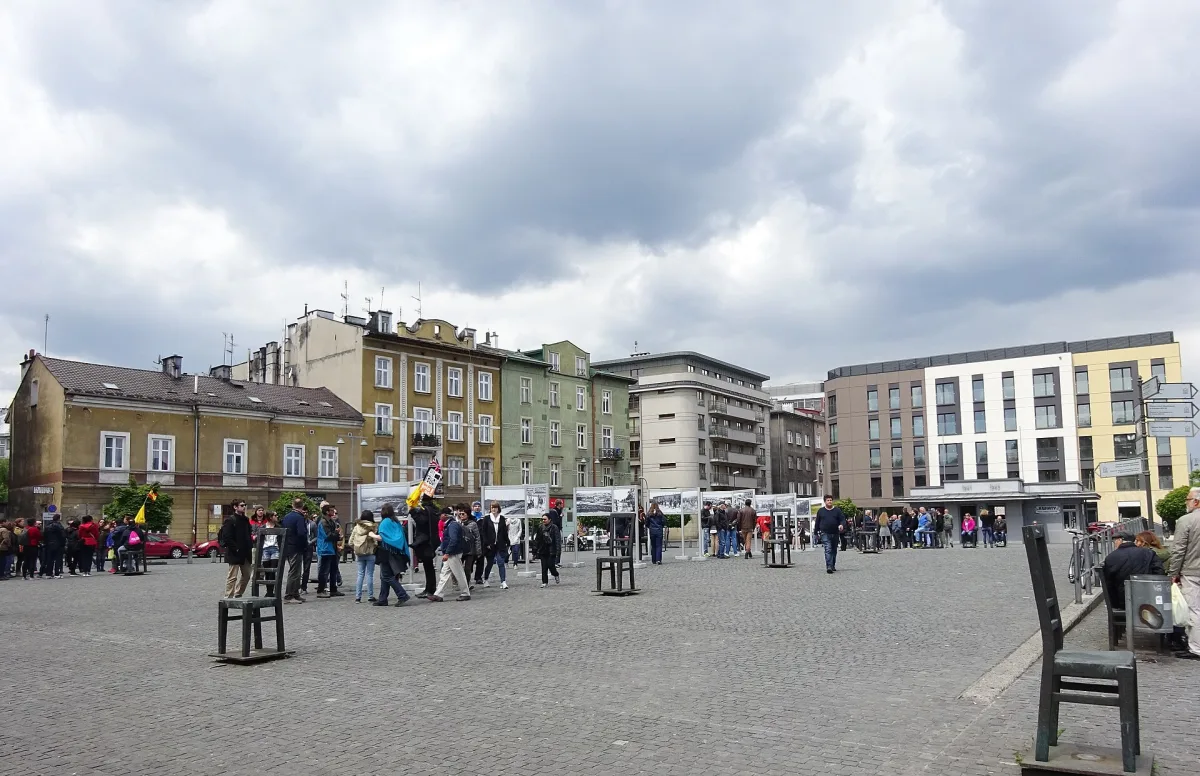
The Kraków ghetto in Podgórze, closed in March 1941 and liquidated in March 1943, is described in a separate entry; it is commemorated by the monument on Ghetto Heroes Square. Many residents of the ghettos described above were deported to the Auschwitz-Birkenau camp, and in Oświęcim the memory of the local community is preserved by the Great Synagogue Memorial Park. Detailed data on each ghetto can be checked in studies by the Jewish Historical Institute and in Virtual Shtetl, and information on commemoration in local museums and town offices.
Be the first! Add a comment.
You need to log in to add a comment.
Log in