
A doctor who came on holiday in 1873
Tytus Chałubiński, a professor of pathology born in Radom in 1820, came to Zakopane with his family for a holiday in July 1873, at the urging of the actress Helena Modrzejewska. This is what Wikipedia says. It is the date of the first stay that his biography knows anything about: no closer details have survived of Chałubiński's earlier trips to the Tatras, and the stay of 1873 has been described as his first visit to Podhale after a break of more than a decade. So it can be said that he was in the Tatras earlier, but from 1873 he returned every summer.
That summer changed his relationship with the place. On 3 August he took part in a reception at the home of Ludwig Eichborn, where he supported the plan to found the Tatra Society, and on 1 September a cholera epidemic broke out in Zakopane. According to Wikipedia, Chałubiński, despite the lack of basic equipment, began to fight it: he brought medicines and more than half a tonne of food from Kraków at his own expense, had contaminated wells removed, and by 10 October the cases had stopped. From then on the highlanders (górale) held him in respect, and he, as we read, spent every summer in Zakopane.
What the “excursions without a programme” were
From 1876 Chałubiński collected Tatra mosses during expeditions that he called “excursions without a programme”. The name came from the subtitle of his book “Six Days in the Tatras”, published in 1879, his only book on this subject. In it he described the expedition of 7-12 September 1878, during which he climbed Gerlach again, and then Wysoka, Rysy and Murań.
Wikipedia describes this undertaking as a new style of walking tour. A number of tourists and a large highlander caravan followed the professor: guides, porters and musicians. They mostly spent the nights in makeshift places in the upper parts of the valleys, and the evenings passed in talks, music and dancing by the campfire. The aims were aesthetic and sporting impressions, the study of natural phenomena, improving the health of the participants and training new guides. The excursions were led by Szymon Tatar the Elder, Maciej Sieczka, Jędrzej Wala the Elder and Wojciech Roj the Elder. Chałubiński's most intensive climbing period fell in 1876-1878. He organised his last such expedition in July 1887, to Rohače, and it was there that he suffered a stroke; he survived but remained partly paralysed. He died in Zakopane on 4 November 1889.
Sabała: what is known and what is a tale
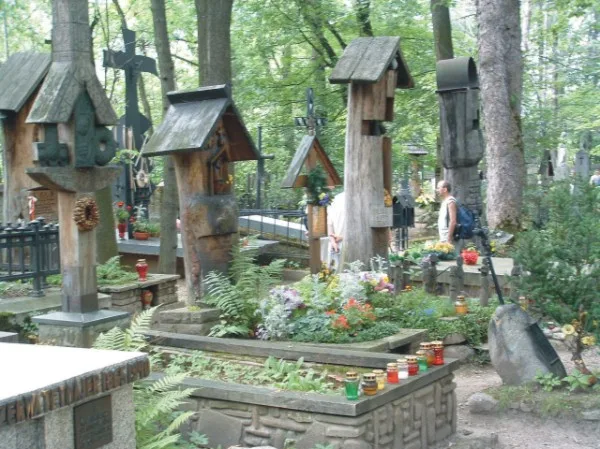
A regular participant in these expeditions was Jan Krzeptowski, known as Sabała. According to Wikipedia he was born on 26 January 1809 in Kościelisko, died on 8 December 1894 in Zakopane and was buried in the Cemetery of Merit at Pęksowy Brzyzek. He was a highlander, a musician, a hunter and a storyteller, and an honorary Tatra guide. The surname Krzeptowski is an adopted one; earlier he and his brothers bore the surname Gąsienica.
The source is cautious about his youth: he was a poacher and, reportedly, also a brigand. The entry states directly that he took part in the Chochołów Uprising and, after its collapse, spent a short time in an Austrian prison, but this is still a single source. Much of his legend is made of such stories. What is known is that he accompanied Chałubiński and Stanisław Witkiewicz on mountain expeditions, and that his tales were published by others: Bronisław Dembowski in 1892 and Andrzej Stopka Nazimek in 1897. Henryk Sienkiewicz wrote “Sabała's Fairy Tale” in 1884. Witkiewicz called Sabała the “Homer of the Tatras”.
The best-known anecdote is a brigand attack staged for Helena Modrzejewska, in which Sabała appeared as the harnaś, the brigand chief. It is a story handed down in literature, not a document. Sabała's family home at Krzeptówki, Sabała's Cottage, is entered in the heritage register. Wikipedia states that an exhibition of the Tatra Museum was housed there in 1979-1984. A joint monument to Sabała and Chałubiński was unveiled in 1903 in the town centre, to a design by Stanisław Witkiewicz.
The Tatra Society and the road to spa status
According to Wikipedia, the Tatra Society was founded on 31 December 1873 as the Galician Tatra Society, registered on 19 March 1874 with its seat in Nowy Targ, and in May 1874 it changed its name and moved to Kraków. Chałubiński is listed among the founders or participants in the first work, alongside Fr Józef Stolarczyk and Walerian Eljasz-Radzikowski. The source dates his own ordinary membership to 1874 or the first half of 1875, and his honorary membership to 27 May 1877. The Society built mountain huts and marked trails, and in 1882 it opened the Tatra Station in Zakopane. At its initiative a woodcarving school for poor boys was founded in 1876; Chałubiński was its originator. The Tatra Museum, which bears his name, occupies a building on Krupówki.
The date of the spa is disputed. The entry on Zakopane says that the town was officially recognised as a spa in 1886, while the biography of Chałubiński says that it obtained the status in 1885 thanks to his efforts. The difference is one year, but the sources disagree and we give both here. What is certain is that in the mid-1870s Chałubiński began to promote the Zakopane climate as healing for respiratory diseases, and that in 1889 the town had about three thousand inhabitants.
Be the first! Add a comment.
You need to log in to add a comment.
Log in