
A groschen for pretzels for the queen
The oldest known mention of the obwarzanek comes from the accounts of the court of Władysław Jagiełło and Queen Jadwiga. The entry of 2 March 1394 reads: “Dla królowej pani pro circulis obrzanky 1 grosz” (for the lady queen, pro circulis obrzanky, 1 groschen). Wikipedia quotes it in this form, and the same entry and date are given by the materials of Kraków's municipal culinary portal and by the Dzieje.pl portal. National Geographic Traveler writes briefly of surviving court accounts from 1394, from which it follows that obwarzanki were reaching Wawel.
The entry is in a mixture of Latin and Polish: the word “circulis” describes the shape of a circle, and “obrzanky” is an early form of the name. The sources we have consulted do not say what this baked item looked like in the 14th century, so it is best not to equate it with today's strictly defined product.
Privileges and guild rules
According to Wikipedia, obwarzanki could at first be baked only by bakers appointed by the guild, and only during Lent. A privilege of King John Albert of 26 May 1496 allowed only Kraków bakers to bake and sell obwarzanki. A resolution of the city council of 22 April 1529 concerned the baking of bread and the wages of bakers' assistants. The website of the Ministry of Agriculture also recalls that the city's founding privilege of 1257 gave bakers trading rights.
A resolution of 1611 allowed the guild to decide who sold obwarzanki and where. Strict control lasted until 1802, when every baker received the right to bake when his turn came in a draw. This system was used until 1849, and Wikipedia cautiously adds that after that date everyone could probably bake. The stalls, known as bakers' stalls (jatki piekarskie), watched over by eight guild brothers, were in time joined by wicker baskets from which obwarzanki were sold from the 19th century until the 1950s.
The origin of the name and what an obwarzanek is
The name comes from the verb “obwarzać”, meaning to parboil. Before baking, the dough is briefly immersed in boiling water. Dzieje.pl and Kraków's culinary portal link this with halting the activity of the yeast. National Geographic Traveler also notes that the name “obwarzanek krakowski” itself has a short tradition for Kraków, going back to the period of Austrian rule, although the baked item was known earlier.
The obwarzanek is made from wheat flour (up to 30 per cent rye flour may be added), fat, sugar, yeast, salt and water. The risen dough is divided into long rolls called sulki, and two or three of them twisted together are formed into a ring. After rising again comes parboiling, then a topping of poppy seeds, salt or sesame, and baking. The list of traditional products names the Polish salts: Kłodawa, Wieliczka or Bochnia.
Wikipedia notes that the obwarzanek is sometimes wrongly called a bagel or a pretzel, and that similar baked goods are known in Turkey and the Balkans as simit and gevrek. What is recognised at once is the spiral braid of several strands and the marks of the oven grate on the underside.
A European Union designation and the measurements in the register
The Kraków obwarzanek has been in the European Union register of Protected Geographical Indications since 2010, according to Kraków's culinary portal and Dzieje.pl. Earlier, on 28 November 2006, it was placed on the list of traditional products in Lesser Poland Voivodeship, in the category of bakery and confectionery products.
The specification in the EU register gives the diameter as 12-17 cm, the thickness of the braid as 2-4 cm and the weight as 80-120 grams. The entry on the national traditional list gives different values: a thickness of 3-4 cm and a weight of 120-200 grams. These are two different documents, and the measurements in the PGI register apply.
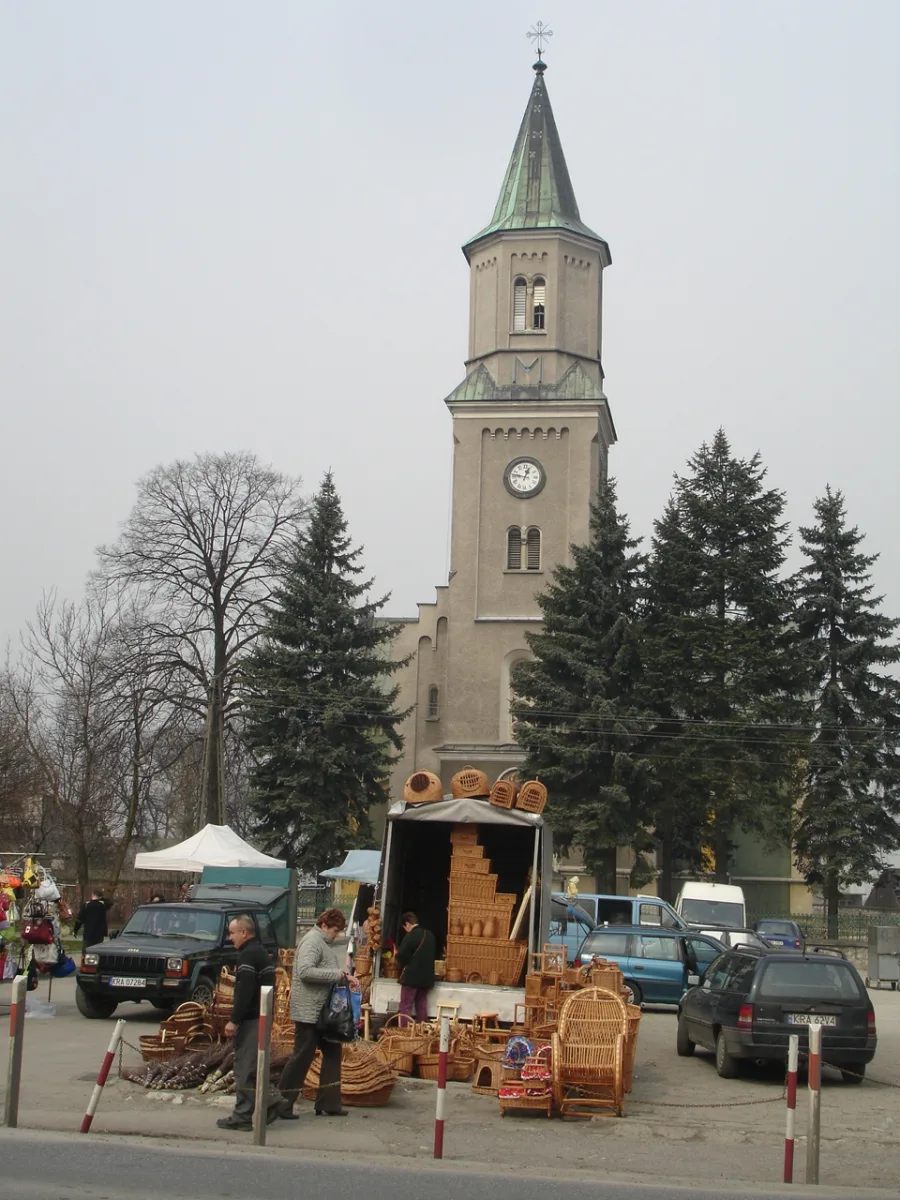
Only obwarzanki baked within the boundaries of Kraków and the Kraków and Wieliczka counties can receive the certificate. According to Wikipedia they can be sold without labels and packaging, from points marked with an appropriate sign, and about 99 per cent are sold from street carts.
Where to find out more
The history of the baked item and the technique itself are shown by the Living Obwarzanek Museum in Kraków (Żywe Muzeum Obwarzanka), where workshop participants shape their own obwarzanek. Wikipedia states that the museum has operated since 2017.
Be the first! Add a comment.
You need to log in to add a comment.
Log in