
Janosik is one of the best-known figures associated with the Tatras in Poland, and at the same time a hero who, according to historians and museum specialists, did not operate on the Polish side of the mountains. Documents and legends tell two different stories about him. Below we separate the one from the other, and we write about the Podhale brigands separately, because they really did roam the area around Zakopane and Kościelisko.
What the documents say about Juraj Jánošík
Juraj Jánošík (in Polish Jerzy Janosik) came from Terchová, a village in the Malá Fatra near Žilina in Slovakia. Wikipedia gives a birth date of 25 January 1688, based on a surviving baptismal record of 16 May 1688, but another source also gives 25 February. Most probably he took part in Francis Rákóczi's uprising against the Habsburgs. He then served in the Austrian army, in a unit guarding prisoners in the castle at Bytča. There he met Tomáš Uhorčík, the leader of the Carpathian brigands.
In October 1710 Jánošík helped Uhorčík escape from prison and soon joined his band. According to the Tatra Museum he was then 22 years old. A year later, when Uhorčík left the band, he became harnaś, that is, leader. His victims were mainly merchants travelling the route on the Polish-Hungarian border, as well as parish priests, messengers and other wealthier people.
The brigand was captured in the winter of 1713. The trial took place on 16 and 17 March in Liptovský Mikuláš, and its course is known from surviving records. The charge was based on the murder of the parish priest of Demänová. Jánošík did not admit to the deed and named his companion as the perpetrator. The sentence was death by hanging on a hook through the left rib. Wikipedia states that he died on 17 or 18 March 1713, and the record describes him in Latin as the leader of a band of robbers and thieves.
Was Janosik in the Tatras
The Tatra Museum writes plainly that he was never in the Tatras. The Tatra Portal adds that he only used the difficult mountain terrain to hide loot, so the sources are not entirely in agreement on whether he ever went beneath the Tatra crags. All of them agree, however, that his territory was the Slovak and Hungarian borderland, not Podhale.
In Podhale for a long time the belief prevailed that Janosik was a Pole and robbed on this side of the mountains. According to Wikipedia and the Tatra Portal it was spread mainly by Kazimierz Przerwa-Tetmajer, author of the Tatra epic “Legenda Tatr” (Legend of the Tatras), which has two parts: “Maryna z Hrubego” and “Janosik Nędza Litmanowski”. This work later provided the basis for the motif of the Polish series and film about Janosik. The Tatra Portal notes that the screen version refers only loosely to history, and that the makers of the film “Janosik. A True Story” came closer to the facts.
In Slovakia Jánošík is spoken of in two ways. Some see in him a hero who, according to legend, took from the rich and gave to the poor. Others consider him simply the leader of an ordinary band. Wikipedia links the birth of the positive image to the second half of the 18th century, and speaks of sharing the loot with the poor solely as a legend. The historical source describes only that he sometimes gave small gifts to girls from the surrounding villages.
The Podhale brigands, according to the sources
In Podhale brigands really did operate. The Tatra Museum names Wojtek Mateja, Tylka, Kubiniec and Suleja. In another passage of the same text Tatar, Gadeja, Marduła and the Nowobilski brothers also appear. Brigandage was at its most intense in the 17th and 18th centuries, during the oppression of serfdom, when young highlanders wishing to avoid conscription also resorted to it. From around 1830 brigandage began to fade, and by the end of the 19th century it had disappeared.
Wojtek Mateja, according to old documents from Zakopane or Czerwienne, was one of the last Zakopane brigands. He attacked manor houses and inns and stole cheeses from shepherds. He was caught, sentenced to ten years in prison and died in 1875 in the prison at Nowy Wiśnicz. His story entered literature, and the Tatra Museum also recalls Sabała's tale of a theft in an inn in Orawice.
Brigand traces in the Kościelisko Valley
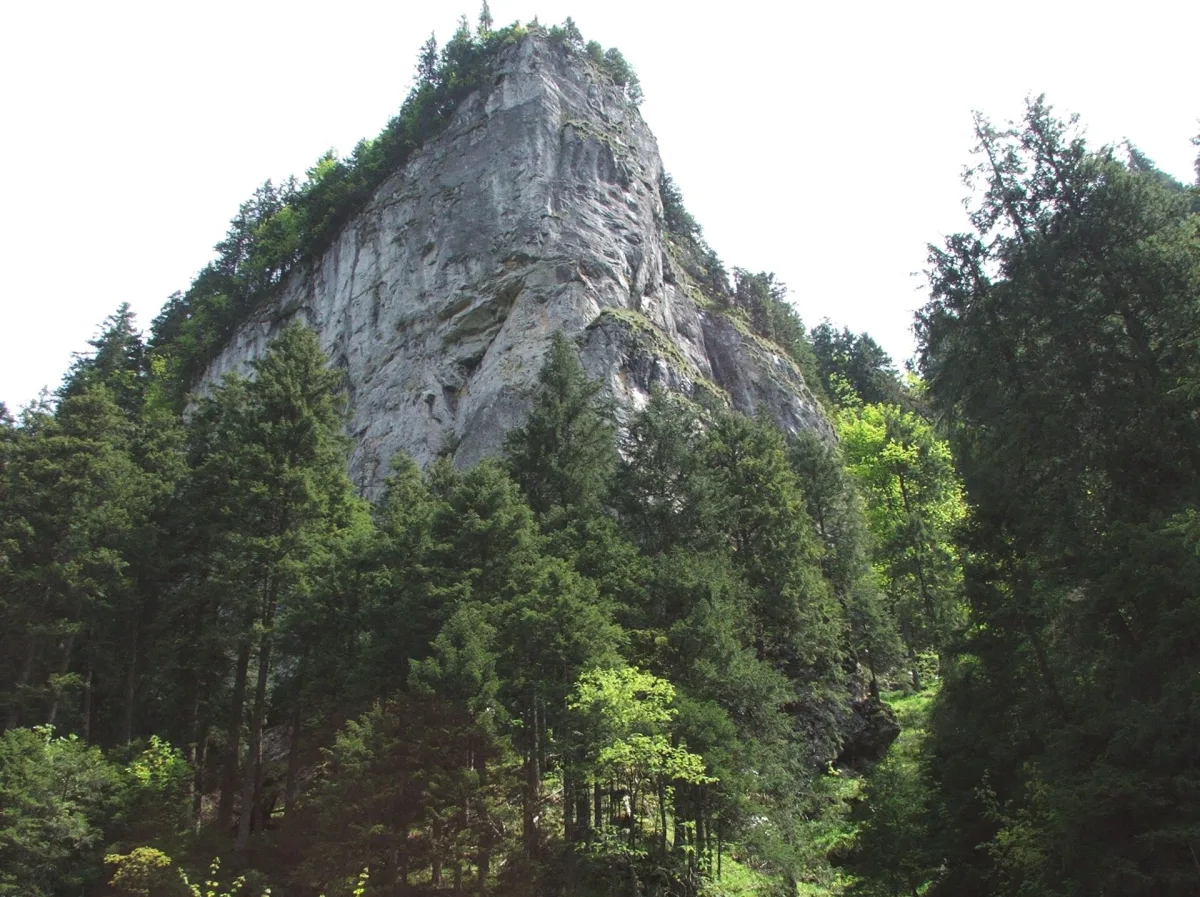
Through the Kościelisko Valley and Tomanowa Pass there once ran a road to Slovakia, used by merchants with pack horses and by smugglers. According to Wikipedia brigands attacked them here more than once, as evidenced by accounts and the names of rocks: Zbójnickie Okna (Brigands' Windows) and Zbójnicka Turnia (Brigands' Crag). The Tatra Museum adds other names, such as Zbójnicka Igła (Brigands' Needle) or the Lower and Upper Zbójnicki Przechód (Brigands' Pass).
The Museum describes the brigands' marks a little above the Kraszewski Gate, in the gully where the small valley of Pod Wysranki begins. On the rocks in its lower part the names of the Kościelisko brigands were cut: Tylka, Kubiniec and Jan Staszel, and beside them the inscription “Sukaj a najdzies”, that is, “search and you will find”. Today the small valley lies in a nature reserve and entry is forbidden; only a small part of it can be seen from the road to the Mroźna Cave.
Cauldrons of gold: the legend of the brigands' treasures
According to legend, brigands buried cauldrons full of gold and silver coins in the mountains. Eljasz Radzikowski wrote of hidden treasures. A legend also tells of a young shepherd who was said to have found such a cauldron on Goryczkowa Pass. This is only a story, because the Tatra Museum cautions that the truth about the brigands is less beautiful than the legend: they were often cruel and ruthless people, and, as the Museum recalls, they did not give their loot to the poor at all, but buried it for themselves. Wikipedia, for its part, writes that the Kościelisko Valley was a favourite place of treasure hunters, as shown by the numerous marks they left on rocks and in caves.
More about the history of the region and about the Tatras themselves can be learnt at the Tatra Museum in Zakopane, whose publication served as one of the sources for this text.
Be the first! Add a comment.
You need to log in to add a comment.
Log in