
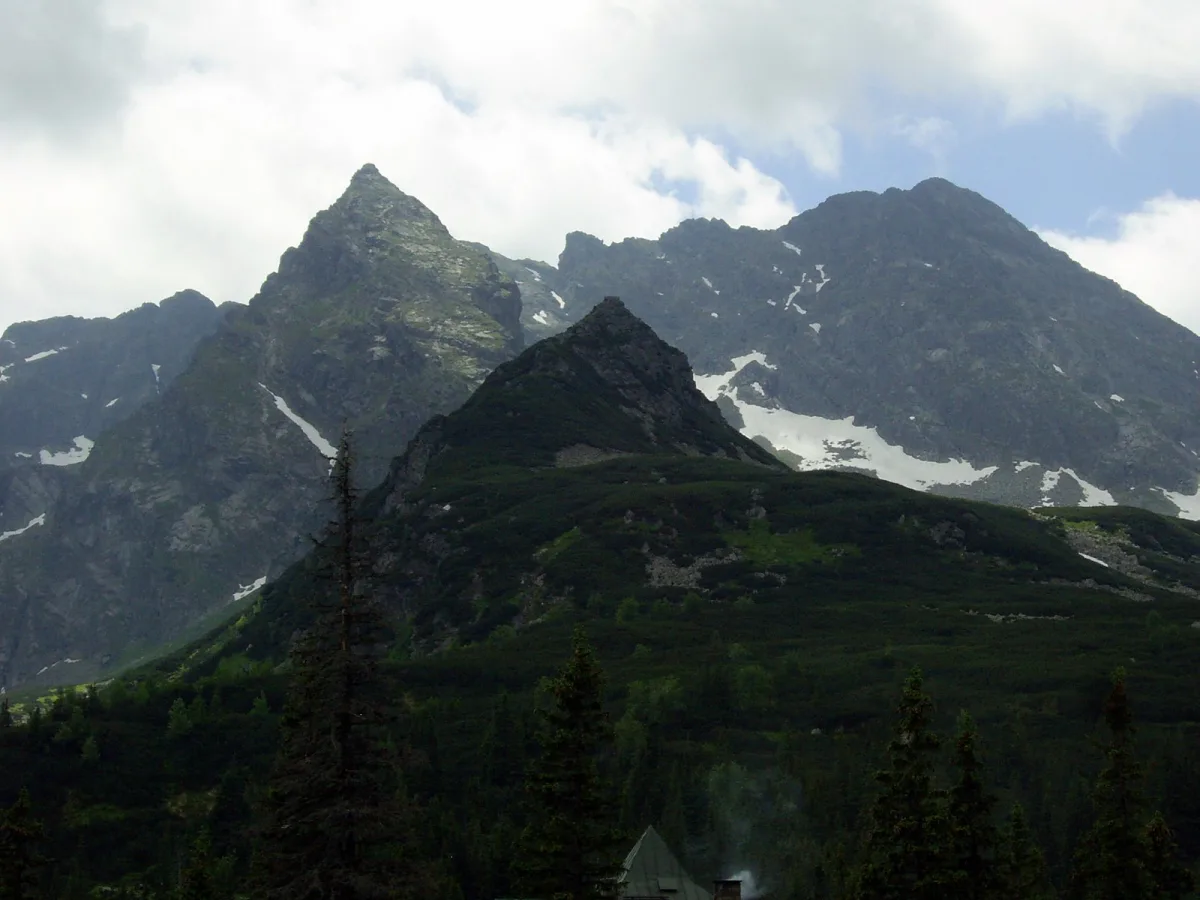
Mieczysław Karłowicz is known above all as a composer of late Romanticism, the author of symphonic poems and songs. The Tatras played as important a role in his life as music. He was a mountaineer, one of the first Polish skiers and a photographer of the mountains, and his death below Mały Kościelec is today also described as one of the impulses for the creation of the mountain rescue service. This text collects what is known about him on the basis of Wikipedia and historical studies.
A composer who settled below the Tatras
Karłowicz was born in 1876 in Wiszniewo and studied, among other places, in Berlin. He first encountered the Tatras in 1889, but began regular mountain trips in 1902. In 1907 he settled permanently in Zakopane. He was active in the Tatra Society, wrote articles about his mountain walks and climbed, first with the experienced highland guide Klimek Bachleda, later often alone.
Wikipedia lists several of his first mountaineering ascents, among others of Wielka Kołowa Turnia in 1907 and of Ciężka Turnia by the north-eastern ridge. He made the winter ascent of Kościelec on 24 January 1908 together with Roman Kordys. Kościelec was climbed on skis only in 1911, by Mariusz Zaruski and Stanisław Zdyb, which Wikipedia ascribes to the beginnings of ski mountaineering.
Biographers make an interesting remark: although the mountains occupied such an important place in his life, in none of Karłowicz's works is there a direct reflection of Tatra nature or highland folklore. His music remained music of late Romanticism, and the Tatras were a space of personal passion.
Skis and camera
He skied from 1907 and was among the pioneers of the sport in Poland. He was active in the Zakopane Skiers' Section. His achievements include the first ski crossing from Hala Gąsienicowa over Liliowe, Zawory and Koprowa Pass to Štrbské Pleso. He thus skied on terrain that is today known mainly from the summer trails around the Gąsienicowa Valley.
He was also a photographer of the mountains. His Tatra photographs were collected years later in the album "Karłowicz in the Tatras". Wikipedia calls the expedition on which he died a ski and photographic one.
8 February 1909
On 22 January 1909, a concert took place in the Warsaw Philharmonic after which Karłowicz, until then generally judged unfavourably by the critics, enjoyed a great success: his "Eternal Songs" were received enthusiastically. Less than three weeks later, on 8 February 1909, he died in the Tatras in a snow avalanche. According to Wikipedia he set out alone on skis from Hala Gąsienicowa towards Czarny Staw Gąsienicowy, and an avalanche came down from the eastern slopes of Mały Kościelec.
The recovery of his body from under the snow is regarded as the first rescue operation of the later TOPR. Karłowicz was, moreover, one of its advocates: as early as 1907 he published a proposal for establishing a mountain rescue service. Formally the Tatra Volunteer Rescue Service (TOPR) was founded a few months after his death, in the same year, 1909. You will find more about the history of the organisation in a separate article on TOPR. The composer was buried on 16 February 1909 at Powązki Cemetery in Warsaw.
Karłowicz's Stone
In the summer of 1909 a granite memorial boulder was placed at the place of his death. Karłowicz's Stone stands on a rock debris field overgrown with dwarf pine, about 30 metres below the blue trail leading from the Murowaniec hut to Czarny Staw Gąsienicowy. The inscription carved on it states that Mieczysław Karłowicz died here, swept away by a snow avalanche on 8 February 1909, and ends with the Latin sentence "Non omnis moriar", that is "I shall not wholly die". Under the text there is a highland sign called the "unexpected cross", with which according to descriptions Karłowicz liked to mark newly discovered trails.
The memory of the composer has also survived in music: Wojciech Kilar referred to his death in the symphonic poem "Kościelec 1909". Streets in many Polish towns bear Karłowicz's name, and in 2009, on the hundredth anniversary of the founding of TOPR, the National Bank of Poland issued a collector's coin with his likeness.
The stone is easy to see on a trip to the Gąsienicowa Valley area. We write about the beginnings of skiing in Zakopane, in which Karłowicz had a part, in the article on Zakopane skiing.
Be the first! Add a comment.
You need to log in to add a comment.
Log in