
A village of bees and of stone
Bartne lies in the Sękowa municipality, in Gorlice County, in the Low Beskids. The village has been mentioned since 1629. The name, Bortne in Lemko, derives according to Wikipedia from bartnictwo, that is bee-keeping, the old form of beekeeping in tree hollows. There is also a folk etymology that links it with the words "bór tnę" (I cut the forest). Local tradition also says that the village was founded by stonemasons from nearby Jasionka, who quarried material on the surrounding slopes. This is oral tradition, not a finding by historians.
In the 19th century Bartne became famous for its stonemasons' workshops. From the hard sandstone quarried in the Magurycz massif they made millstones and querns for domestic hand mills, as well as wayside crosses and gravestones. The products reached distant places, and one of the millstones, dated 1905, stands today in Bydgoszcz. A reminder of this craft is a stone granary from the first half of the 19th century with a collection of stonemasonry, and stone crosses put up after 1918.
Fr Chylak: a writer from Bartne
Volodymyr Chylak (Wołodymyr Chylak) was born on 27 July 1843 in Wierchomla Wielka into the family of a Greek Catholic priest, and died on 13 June 1893 in Lityń. He studied in Nowy Sącz and Prešov, then at seminaries in Lviv and Przemyśl. He was ordained in 1866 and served successively in Dolina, Izby and Bartne, where according to Wikipedia he was pastor in 1870-1892, that is for about twenty-two years. He spent the last year of his life in Lityń.
What links him with Bartne is precisely this parish and place of work. The entry on the village says that here he created his most important works, among them the novella "Szybienicznyj Wierch" (Gallows Peak). The entry on him calls it his most popular novel. In it he describes the wrongs done to the Ruthenian population by the Polish nobility, including the Bar Confederates. He also wrote feuilletons, essays and ethnographic works, for example on Lemko wedding customs, printed in 1872, and published in newspapers such as "Słowo" and "Russkyj Sion".
Wikipedia calls him the most important Lemko writer of the second half of the 19th century and classes him with the Russophile, that is Old Ruthenian, orientation. His work is said to have played a key role in shaping the group identity of the Lemkos. This assessment comes from a single study, so we treat it as an opinion, not a settled finding. He should not be confused with Fr Dmytro Chylak of Izby, a minister in the Lemko Republic of 1918-1920. That is a different person, born in 1865.
The tserkva, the museum and the cemetery
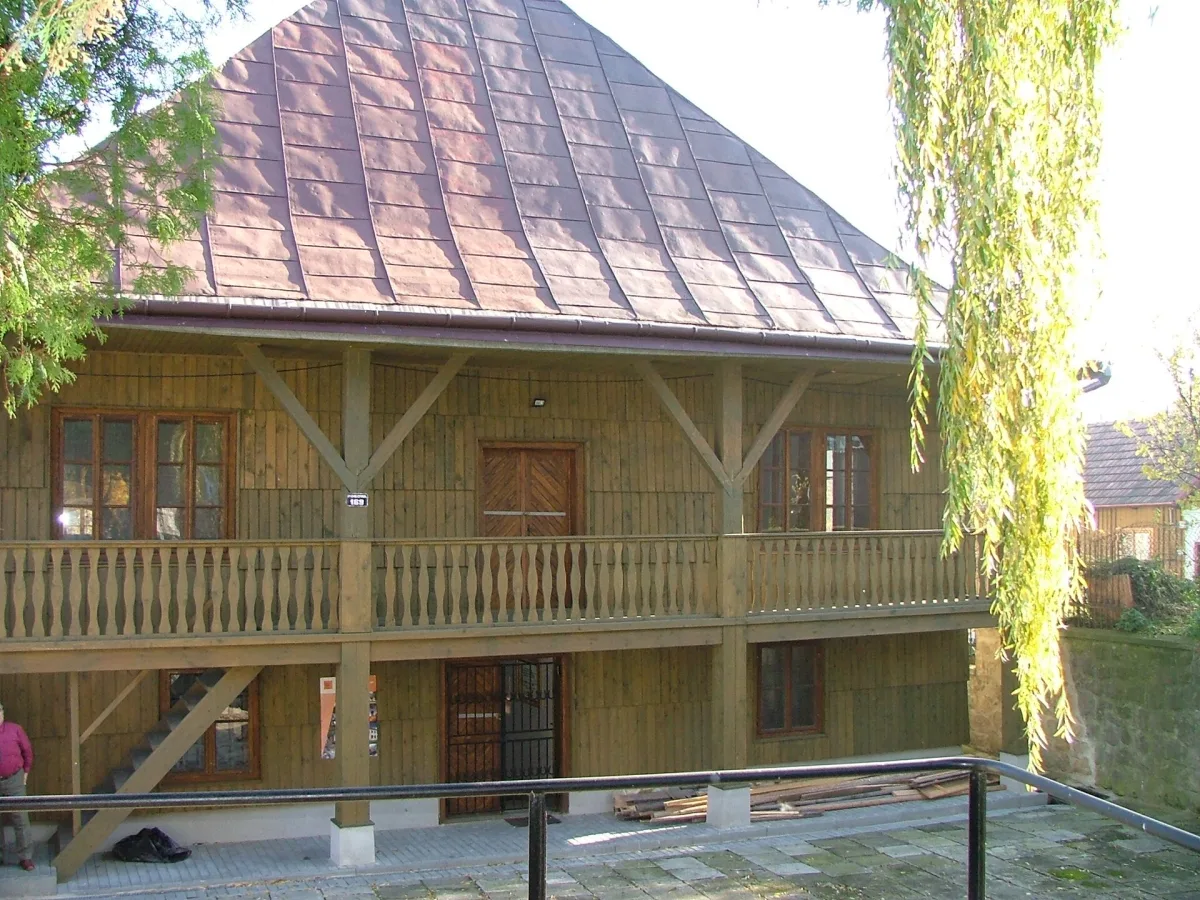
The tserkva complex is described in other texts, so here only as much as is needed for orientation. The Tserkva of Saints Cosmas and Damian (a wooden Eastern-rite church) was built around 1842, while zabytek.pl gives a different date, 1784. Today it houses a branch of the Gorlice museum, the Karwacjan and Gładysz Manor Houses, with Lemko sacred art: a complete iconostasis from the 18th century, a side altar from 1797 and icons from surrounding villages. The Gorlice museum recalls that the idea of a department of Lemko art in Bartne appeared in a programme of the 1960s, and the renovation of the complex took place in 1968-1970.
Next to it stands a cemetery with gravestones made by local stonemasons. The village also has a surviving cemetery of cholera victims from 1873. In 1928 a second, Orthodox tserkva of Cosmas and Damian was built, modelled on the church in Krzywa but half the size. Beside it stands a monument to the composer Dmytro Bortniansky. Wikipedia writes that his father, Stefan Szkurat, came from Bartne.
War, deportation and return
During the First World War the Battle of Gorlice-Tarnów (the Gorlice operation) was fought here, as evidenced by war cemetery no. 64. In December 1918 the secretary of the Lemko Supreme Council (Naczelna Rada Łemkowszczyzny), set up in Florynka, became Dr Dmytro Sobyn of Bartne.
In 1947, as part of Operation Vistula, the whole village was forcibly deported. Some of the residents were taken to the western territories, some to the north of Poland, and some people, according to Wikipedia, were held in the camp at Jaworzno. At the end of the 1950s some of the families returned, and their descendants live in the village to this day. A broader discussion of the operation can be found in the Places of Remembrance section.
Above the village: the bacówka on Mareszka
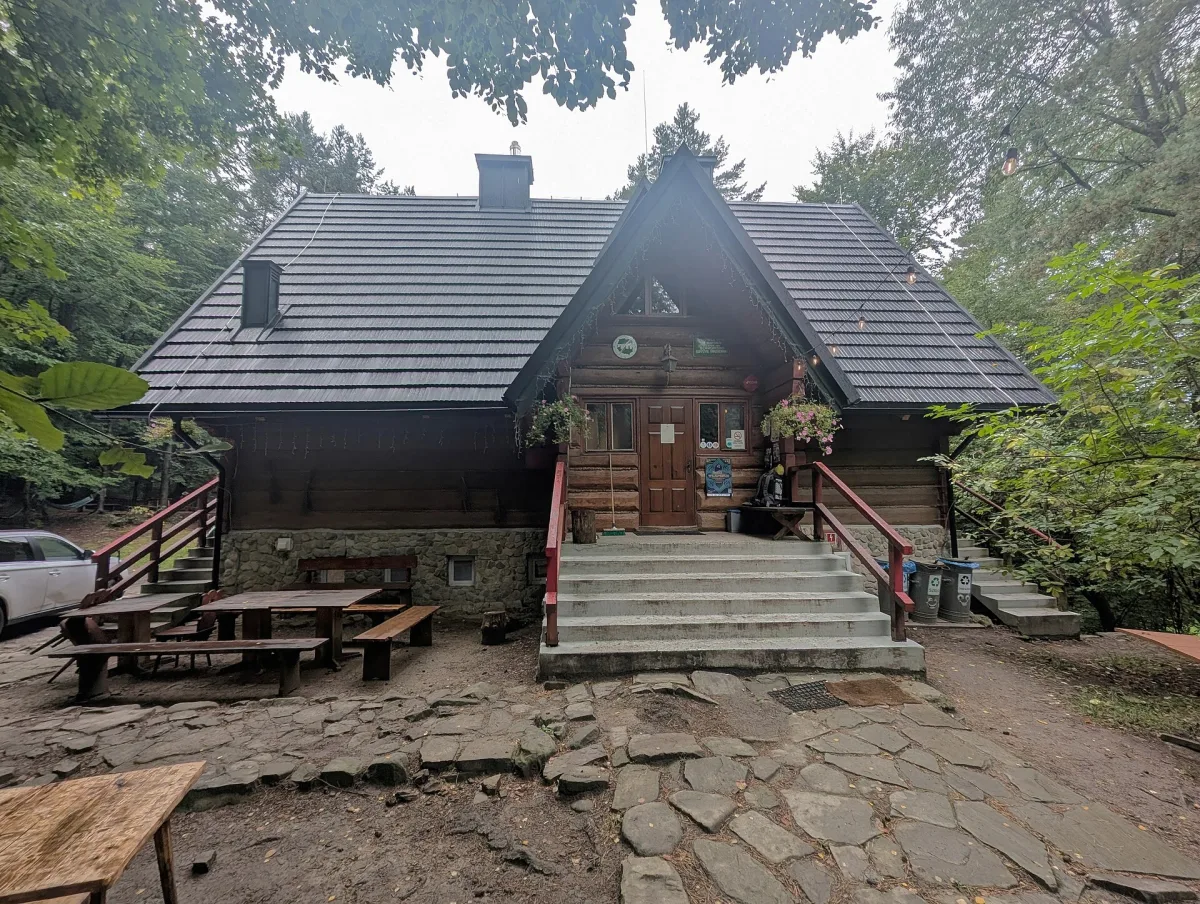
Above Bartne, on the slopes of Mareszka in the Magura Wątkowska range, stands the PTTK Bacówka in Bartne, which has operated since 1977. The red Main Beskid Trail runs past it. A road leads to the hut from the village, so getting there does not require a march of several hours. Not far away, in neighbouring Wołowiec, stands the Tserkva of the Protection of the Mother of God from the 18th century.
Be the first! Add a comment.
You need to log in to add a comment.
Log in