Places of remembrance in Lesser Poland: 70 sites, from Auschwitz-Birkenau and the Podgórze ghetto to First World War military cemeteries.
This page arranges places connected with war and genocide in Kraków and the region: camps, ghettos, execution memorials, former synagogues and military cemeteries. These are not ordinary sightseeing stops but places of mourning and of documenting crimes. The descriptions keep to facts, and the page is organised by type of place, not by popularity.
How to visit places of remembrance?
Enter places of remembrance in silence and in clothing suited to the occasion. Some are museums with entry rules, others are open grounds, monuments or cemeteries, where the usual respect owed to a burial place applies.
Some of these places are museums, while others are only a trace left by a destroyed building or a monument in an open space. Before visiting a museum, check the entry rules on the organiser's site. Each place needs its own attention and time, so do not plan them as further stops in one hurried day.
The list covers three main groups: 38 places linked to the First World War (mostly cemeteries), 12 to the Second World War (camps, ghettos, execution memorials) and 4 marked as Jewish heritage. The rest, such as the Palace Museum in Zakopane or the mass grave in Ojców, carry other tags.
What is in Oświęcim?
In Oświęcim and its surroundings lie places connected with the German camp and with the fate of the town's Jewish residents. We describe them in order from the camp to the traces in the town centre.
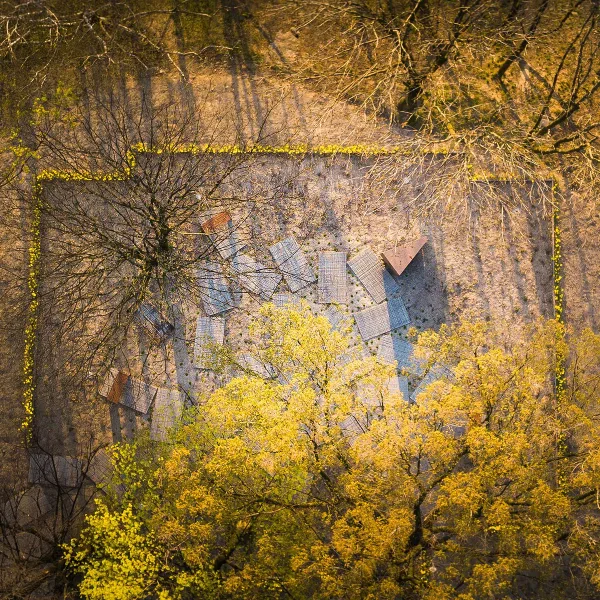
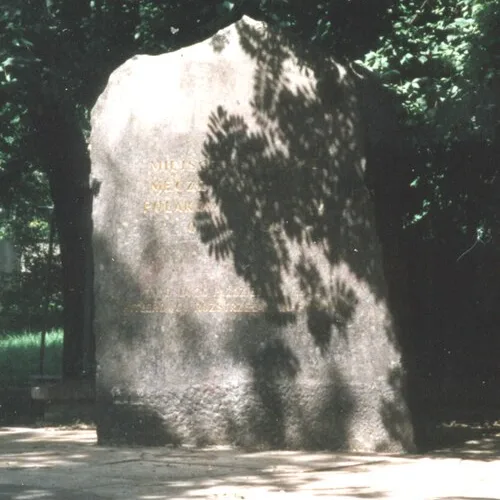
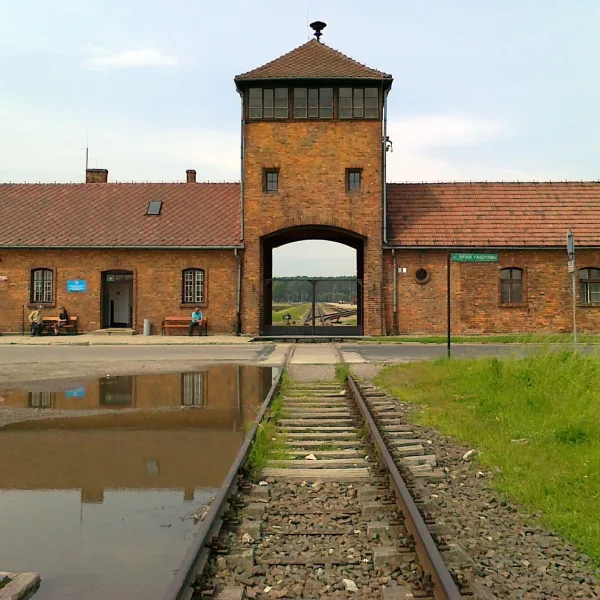
Auschwitz-Birkenau was a complex of German Nazi concentration camps and an extermination camp that operated in 1940-1945 in Oświęcim and nearby villages. Today the two surviving sites, Auschwitz I and Birkenau, form the Auschwitz-Birkenau State Museum, a place of remembrance and an institution documenting German crimes in occupied Poland. Outside the museum grounds, in Brzezinka, lies the Red House (Bunker I), the first improvised gas chamber in Birkenau, put into operation in March 1942. In the town centre, on Berka Joselewicza street near the Market Square, lies the Great Synagogue Memorial Park, commemorating the synagogue that German occupiers burned and demolished on the night of 29 to 30 November 1939. The park was created on the initiative of the Jewish Centre in Oświęcim. In January 1945 prisoners of the camp were marched to the railway station in Wodzisław Śląski, and their route is commemorated by the marked Auschwitz Prisoners' Evacuation Trail, which links Oświęcim with Wodzisław Śląski.
Which places of remembrance are in Podgórze?
In Podgórze, on the south side of the Vistula, lie most of the places connected with the German occupation of Kraków. They recall the ghetto, the Płaszów camp and executions. Visiting each takes separate time.
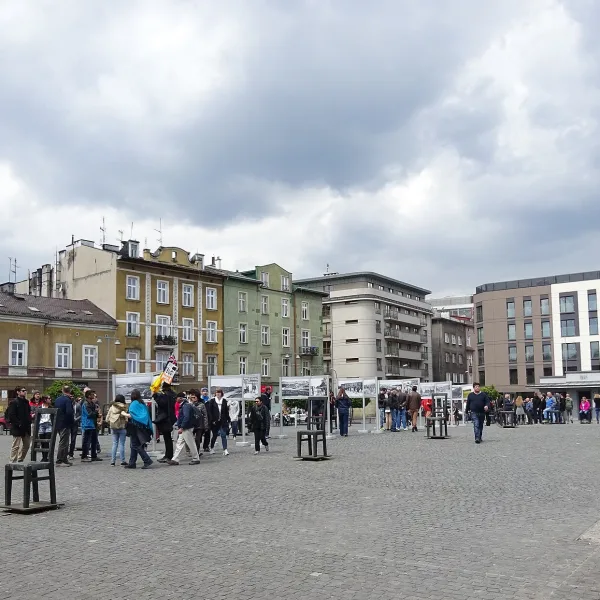
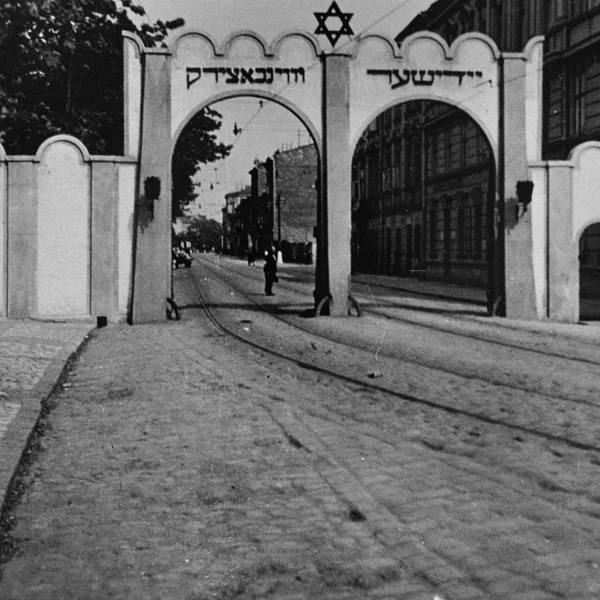
The Kraków ghetto was a closed district for the Jewish population, established by the German occupation authorities in Podgórze in March 1941 and liquidated in March 1943. Today its history is recalled by fragments of the wall, Ghetto Heroes Square and a museum in a former pharmacy. On the square stands the memorial made of seventy elements in the form of chairs, set out on the square and at the tram stop on Na Zjeździe street; it was unveiled in 2005.
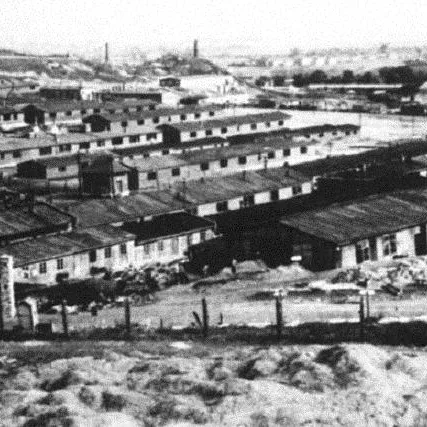
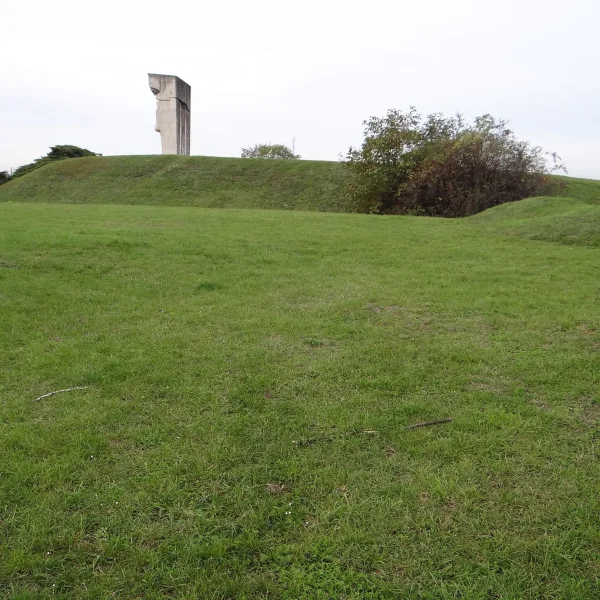
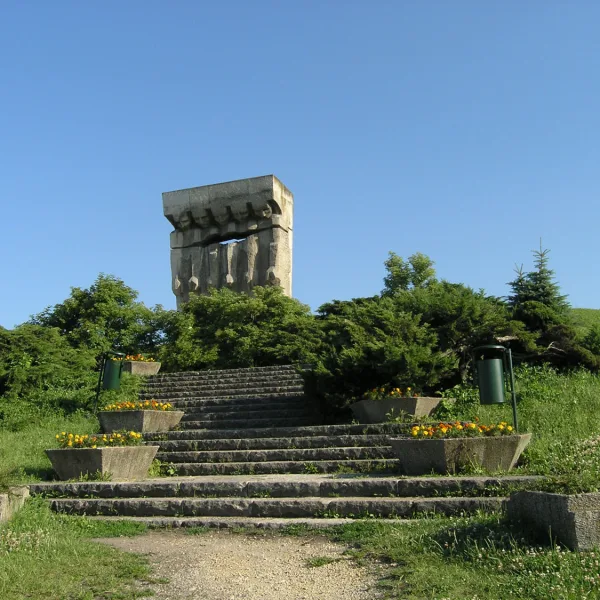
The site of the former KL Plaszow camp in Podgórze was a German forced-labour camp and, from 10 January 1944, a concentration camp, operating in 1942-1945. It was built on the site of old Jewish cemeteries and today is a place of remembrance run by the Museum - KL Plaszow Memorial Site. At Heltmana 22 stands the villa of the camp commandant, the former Villa Pod Skałą, completed in 1934. On the edge of the camp site stands the Monument to the Victims of Fascism, commemorating the people murdered in the camp. On the floor of the Liban quarry lies the Road of Matzevot, a remnant of the set of the film "Schindler's List" of 1993: these are not real gravestones.
Other places in this district: the Abraham cemetery at Abrahama 3, the site of a former necropolis where no gravestone has survived, and the memorial to those shot on 10 September 1939, by the wall of the new Jewish cemetery, commemorating the first mass execution of Poles in occupied Kraków, in which the Germans shot 13 residents of Kraków. On Wodna street, next to the Kraków Płaszów station, stands the memorial to those hanged on 26 June 1942, commemorating seven Poles. In Podgórze Duchackie lies Redoubt FS-22, a remnant of the Austrian Kraków Fortress from 1855-1856, which also has a tragic history from the Second World War.
What remains of the occupation in other districts of Kraków?
Outside Podgórze, places of remembrance are scattered across the city: a former Gestapo headquarters, execution memorials, military plots and events from the post-war years. Each has its own history.
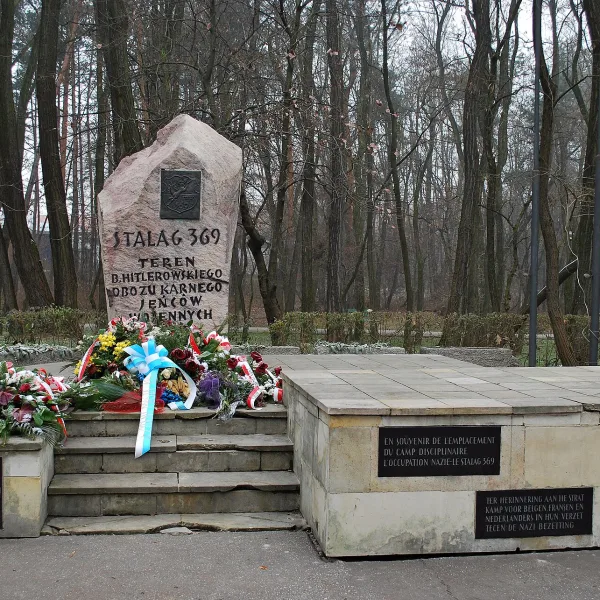
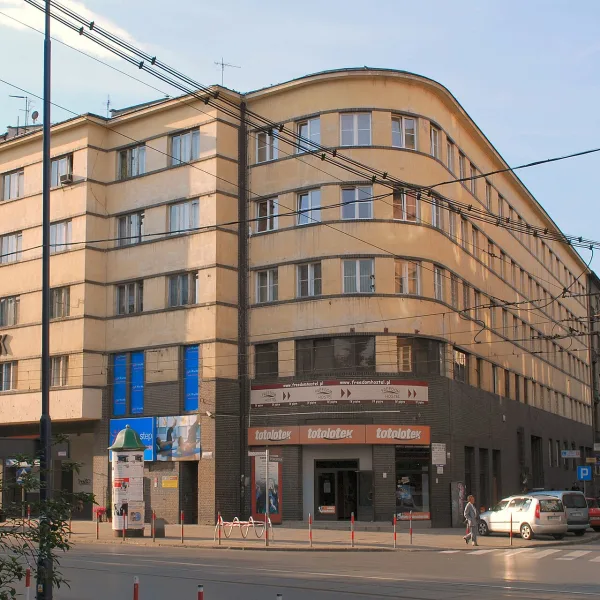
At Pomorska 2 a branch of the Museum of Kraków operates in the former Gestapo headquarters, in whose cellars a temporary detention centre was located. Inscriptions made by prisoners survive on the cell walls. In Krowodrza, on Grottgera street, stands a granite obelisk commemorating Poles shot on 20 October 1943. In the north of the city, in Wzgórza Krzesławickie, lie two memorials to those shot: in Grębałów, where 80 Poles were shot on 29 January 1944, and in Krzesławice, commemorating an execution in November 1943. In Dębniki, on Żywiecka street, stands the Stalag 369 memorial, commemorating a German prisoner-of-war camp.
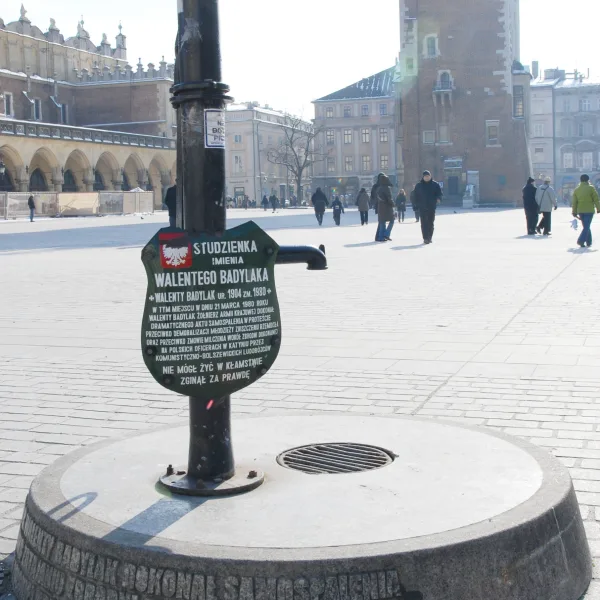
On the Main Square is Badylak's Well, a hydrant with plaques commemorating Walenty Badylak and the protest of 21 March 1980. In the Rakowicki Cemetery, at Rakowicka 26, stands the memorial to Polish victims of the Volhynia massacre, for which the Kraków City Council voted on 26 May 2004.
What traces of ghettos and synagogues are in other towns?
Outside Kraków and Oświęcim, places of remembrance of the Holocaust are in Tarnów, Wadowice, Olkusz, Chrzanów and Ojców. Usually they are memorials where no walls or former synagogues remain.
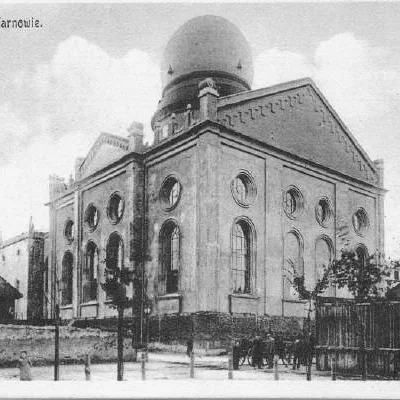
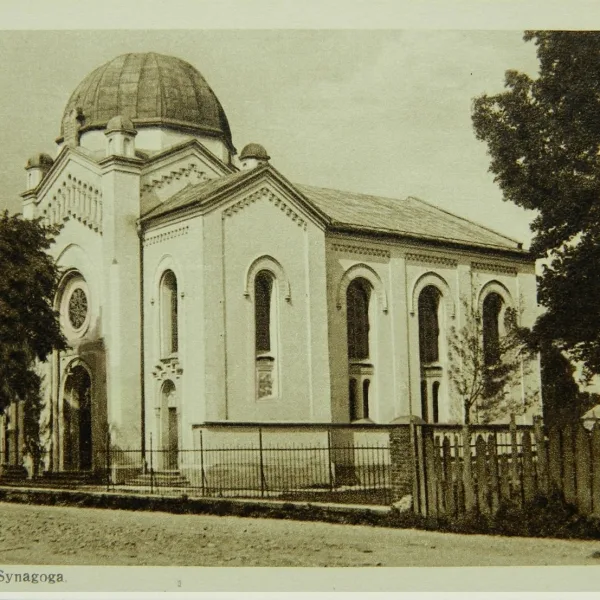
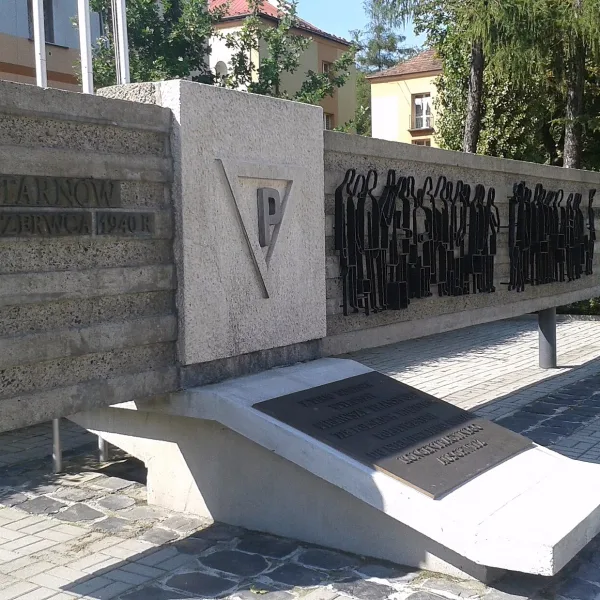
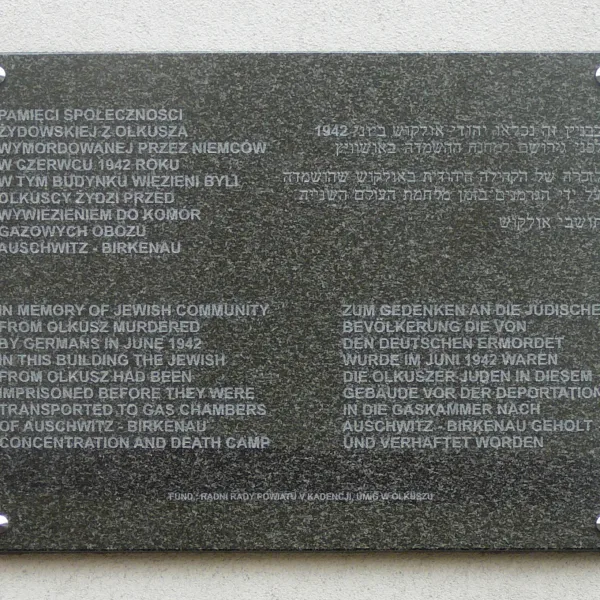
In Tarnów a ghetto existed in 1942-1943. On Plac Więźniów KL Auschwitz, between Bóżnic and Dębowa streets, stands the memorial to the first transport of prisoners to KL Auschwitz of 14 June 1940, in which the Germans led out a group of 753 people from Tarnów. After the New Synagogue in Tarnów there remain a commemoration on the spot and a fragment of a column in the cemetery. In Wadowice the ghetto existed from 3 July 1942 to August 1943 (the Wadowice ghetto), and on Gimnazjalna street stood a synagogue built in 1885-1889, which no longer exists. In Olkusz the ghetto existed from September 1941 to June 1942, in Chrzanów the Great Synagogue of 1786-1787 no longer exists, and in Ojców, by a trail in the Sąspowska Valley, there is a mass grave of Jews, the burial place of about 20 people shot in 1943. A list of sites tied to the history of the Jewish community is under the tag Jewish heritage.
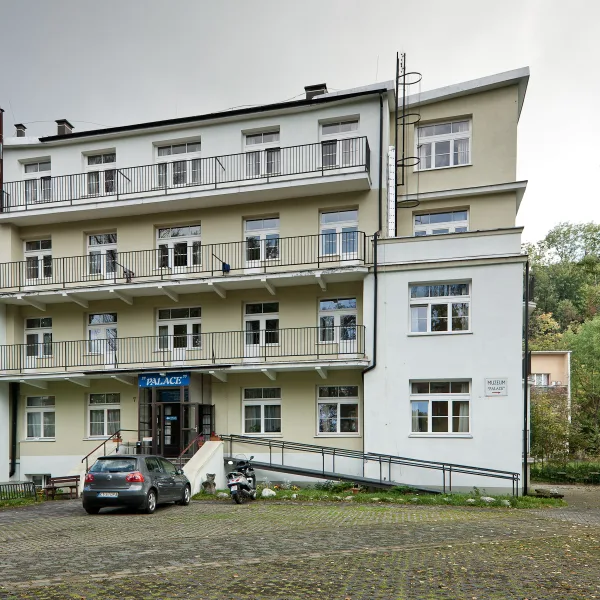
In Zakopane the Palace Museum at Chałubińskiego 7 operates in the former Gestapo headquarters, called during the occupation the "Torture Chamber of Podhale", and is a place of remembrance of prisoners and of people from the resistance in Podhale. In Zręczyce in the Gdów commune, a mound and memorial commemorate eleven people shot on 6 September 1939 by the Wehrmacht.
Where are the First World War military cemeteries?
Military cemeteries from 1914-1918 are the largest group in this list: of 70 sites, 38 carry the tag "First World War". They lie in the Beskid Niski, in the foothills and around Tarnów, Gorlice, Limanowa and Bochnia.
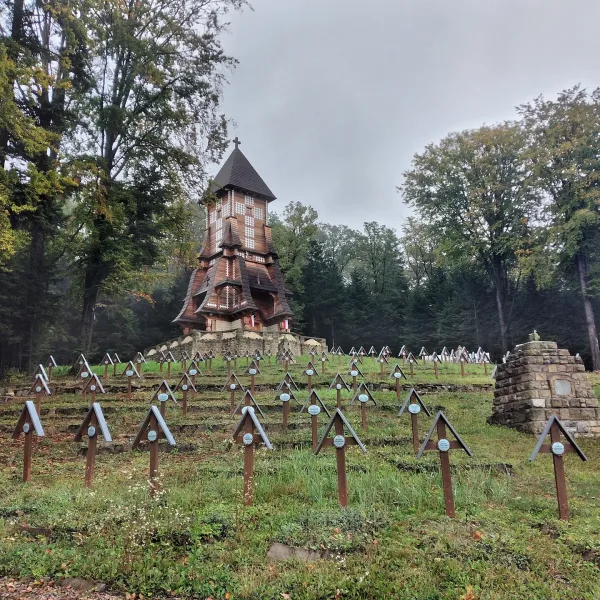
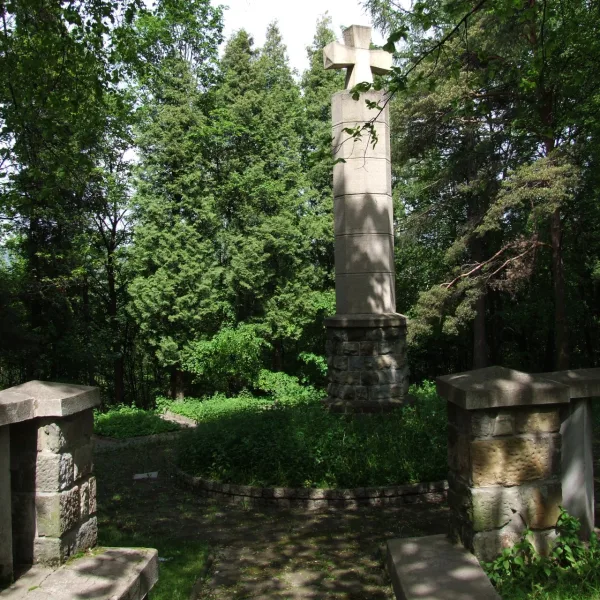
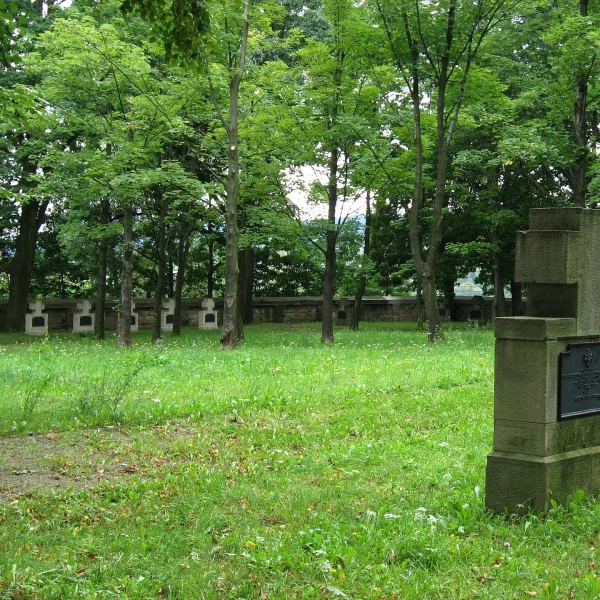
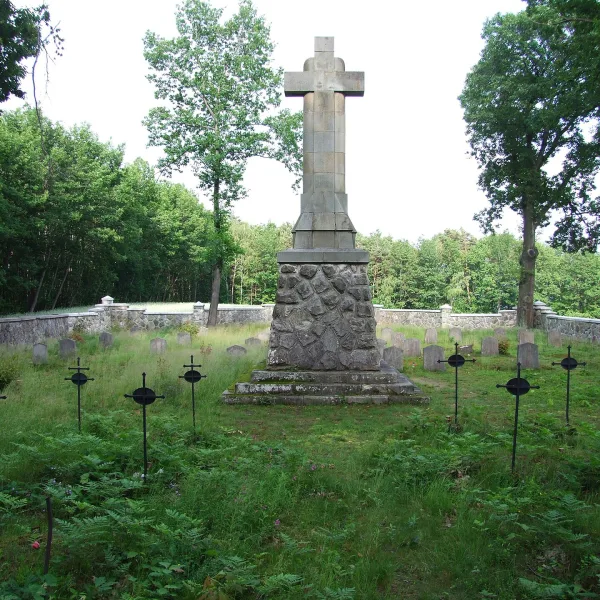
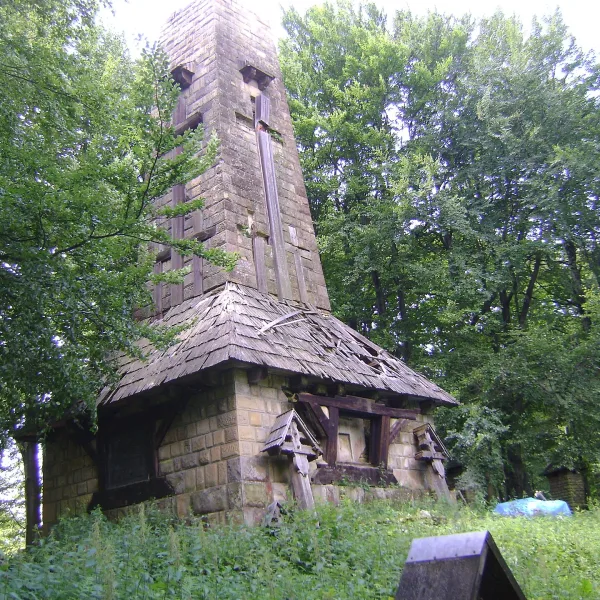
The West Galician war cemeteries, about 400 sites, were built by the War Graves Department of the Imperial and Royal Military Command in Kraków. In the Gorlice district stand out cemetery no. 123 in Łużna-Pustki, established after the fighting of May 1915, where 1,204 people from three armies are buried, and cemetery no. 120 in Łużna-Podbrzezie. On a hill above the centre of Gorlice lies cemetery no. 91, where 913 people from the First World War are buried, mainly from the Battle of Gorlice. Nearby is also a Second World War military cemetery. In Lichwin, in the Pleśna commune, lies cemetery no. 185, which has the most burials among the 63 cemeteries of the Tarnów district (614 soldiers), and next to it cemetery no. 186. In Limanowa, on Jabłoniec hill, lies cemetery no. 368 from the fighting of December 1914. In Rajbrot cemetery no. 303 is part of the European Cemeteries Trail.
In the Beskid Niski lies cemetery no. 46 in Konieczna, established in 1915 for soldiers killed in January and February of that year, where 303 Austro-Hungarian and Russian soldiers are buried. In Krzywa, in the Banica hamlet, is cemetery no. 62 with 52 soldiers. In Wieliczka cemetery no. 381 has 93 graves of soldiers of three armies, and in Rabka-Zdrój cemetery no. 233 covers only 55 square metres.
Many cemeteries are very small: in Czulice (no. 394, 16 soldiers), in Prusy (no. 399, the grave of one unknown Austrian soldier), in Brzezie (no. 332) or in Cichawa (no. 333). In Kraków there are plots in Rakowice (no. 388), in the Jewish cemetery on Miodowa 55 (no. 387) and in Podgórze (no. 386). A wider context is given by the category cemeteries and monuments, the tag First World War and the tag Second World War.
Frequently asked questions
Which places of remembrance in Kraków lie in Podgórze?
The Kraków ghetto with the memorial on Ghetto Heroes Square, the site of the Płaszów camp with the commandant's villa, the Abraham cemetery, the memorials to executions of 10 September 1939 and 26 June 1942, and Redoubt FS-22.
Is the Road of Matzevot in Płaszów made of real gravestones?
No. It is a remnant of the set of the film "Schindler's List" of 1993, lying on the floor of the Liban quarry. They are not matzevot from the cemeteries on which the camp was established during the occupation.
How many First World War military cemeteries are there in Lesser Poland?
There are about 400 West Galician war cemeteries. This list includes over 30, from large ones, such as no. 123 in Łużna, to single-grave ones, such as no. 399 in Prusy.
Is the Red House in Brzezinka part of the Auschwitz-Birkenau museum?
No. The place lies in Brzezinka, outside the museum grounds, and was the first improvised gas chamber in Birkenau.
Where in Kraków was the Gestapo headquarters?
At Pomorska 2, in the Silesian House, where a branch of the Museum of Kraków operates today. A temporary detention centre was in the cellars, and inscriptions made by prisoners survive on the cell walls.
How to visit places of remembrance?
In silence, in clothing suited to the place and without behaviour that does not befit its gravity. Before visiting a museum, check the entry rules and hours on the organiser's site. You can see all these places on the map.

 Places of remembrance