
Kraków lies in a broad stretch of the Vistula valley, but around the centre rise several hills and artificial mounds from which the city can be seen laid out below. Five of them are mounds, that is earthen monuments of very different age and origin. Alongside them are the limestone ridges of Las Wolski, Podgórze and Dębniki. This overview leads from the oldest mounds, through hills with forts and a monastery, to the youngest mound in the city.
The five Kraków mounds
The five Kraków mounds are the Krakus Mound, the Wanda Mound, the Kościuszko Mound, the Piłsudski Mound and the John Paul II Mound. The first two are older than the written history of the city, and the other three are monuments of the 19th and 20th centuries.
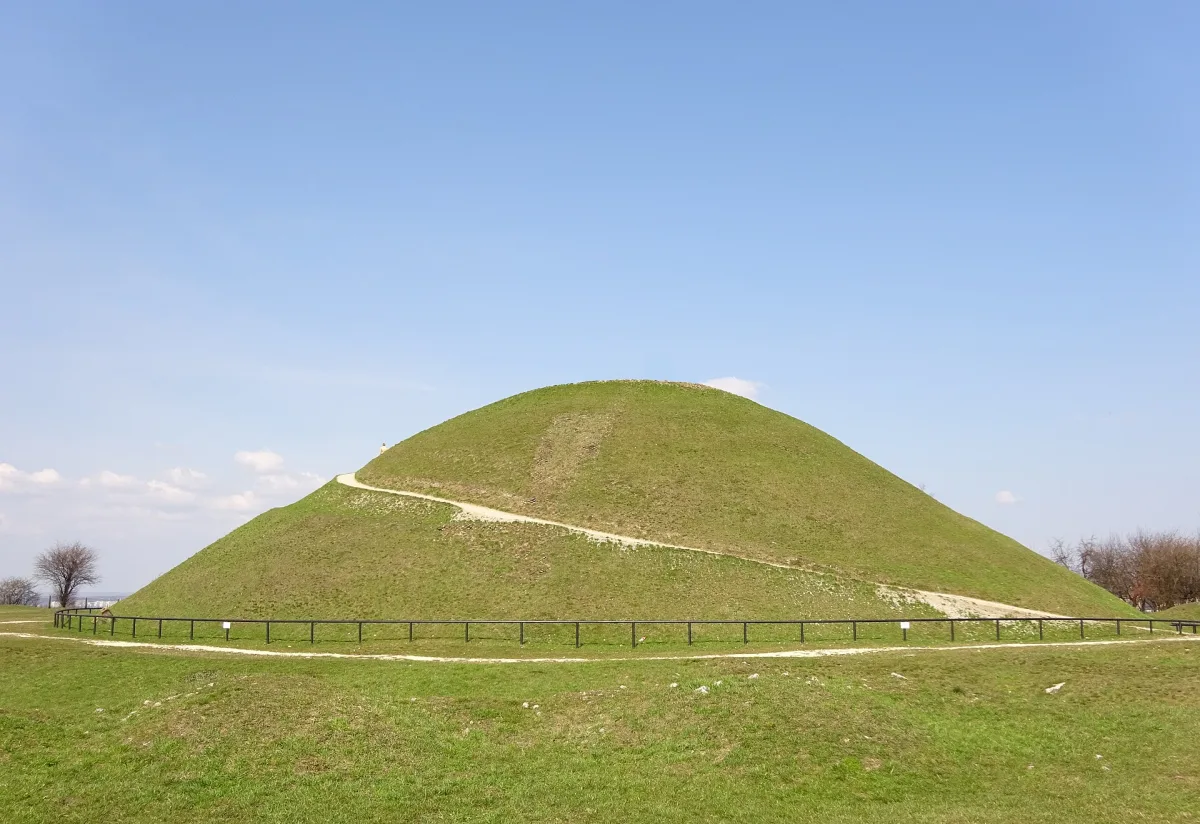
The Krakus Mound stands in Podgórze, on the top of a hill 271 m above sea level. It is 16 metres high and about 57 metres in diameter at the base. According to the legend recorded by Jan Długosz, it was raised by the sons of Krak over their father's grave. Archaeological investigations of 1934-1937 did not find a grave. The dating is disputed: excavations pointed to the earliest around 500 BC, while Prof. Andrzej Buko places the mound's construction between the end of the 8th and the middle of the 10th century, citing a silver Bohemian denarius from the time of Boleslaus II. From the top one can see Wawel and the city centre.
The Wanda Mound lies in Nowa Huta, on Ujastek Mogilski Street. It is about 14 metres high and is estimated to date from the 7th-8th century. In the second half of the 15th century Długosz linked it with the grave of Wanda, the daughter of Krak, but no deep investigations have ever been carried out inside the embankment. In December 2016 ground-penetrating radar showed anomalies in it, without settling what causes them. On top stands a monument with a distaff crossed with a sword, designed by Jan Matejko.
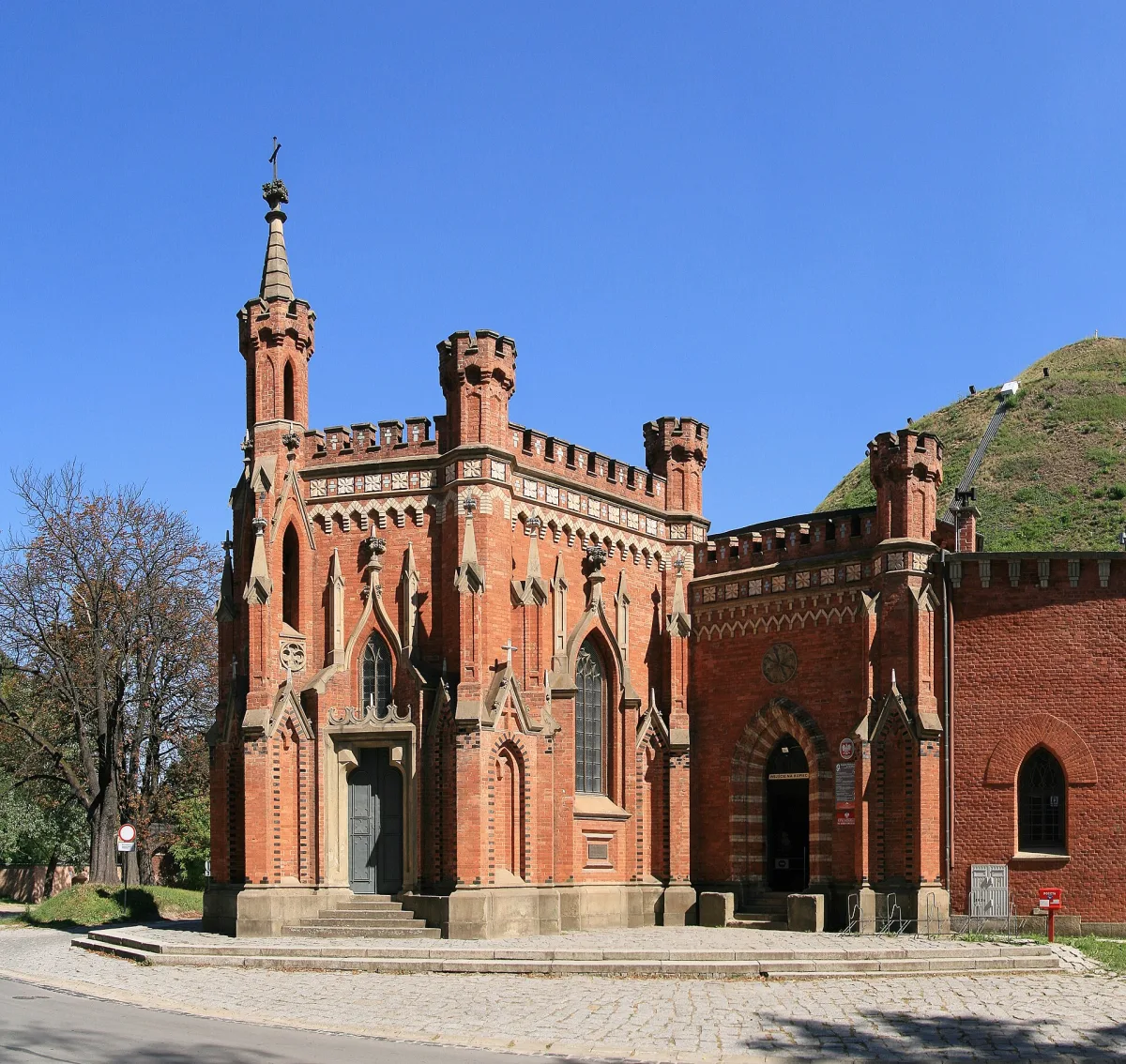
The Kościuszko Mound is the most famous of the five, raised in 1820-1823 on St Bronisława Hill. We have devoted a separate text to its history, the fort and the museum: Kościuszko Mound and Fort no. 2.
The Piłsudski Mound was built from 6 August 1934 to 9 July 1937 on the top of Sowiniec. The idea was put forward by Lt Franciszek Supergan, and the design was prepared by Franciszek Mączyński. Soil from First World War battlefields was placed in the mound. It is about 35 metres high and about 111 metres in diameter at the base. Wikipedia calls it the largest mound in Poland, but its own figures show that precedence between it and the Kościuszko Mound depends on how it is measured: the heights of the two are similar, and the volume given for the Kościuszko Mound (about 167,000 cubic metres) is greater than for the Piłsudski Mound (about 130,000). The given heights of the summit above sea level also differ: 393.6 m in the entry on the mound and 383.6 m in the entry on Sowiniec.
The John Paul II Mound is the smallest and youngest. It was raised between 31 May and 10 June 1997 in Dębniki, on the grounds of the Congregation of the Resurrection, to commemorate the Pope's pilgrimage to his homeland. It is 7 metres high, not counting the cross. It stands on monastic grounds, so you need to ask on the spot about entry.
Three of the mounds are linked by the Three Mounds Run, held since 2007: the start is at the Krakus Mound and the finish at the foot of the Piłsudski Mound. The route is 13 kilometres long.
Las Wolski: Sowiniec, Pustelnik and Srebrna Góra
Sowiniec is 358 m above sea level and according to Wikipedia is the highest natural elevation in Kraków. On the top there is a large clearing with shelters and benches, in the middle of which stands the Piłsudski Mound. The slopes are made of Jurassic limestone, from which rocks protrude, including the Panieńskie Skały reserve.
Pustelnik, about 355 m above sea level, is the second highest hill of the city. On the top is the Jacek Malczewski Clearing, named after the painter who often came here. The hill once had views, but today trees block them, so it is more a destination for a forest walk than a place for photographs.
Srebrna Góra is 317 m above sea level. On the top stands the Camaldolese monastery with the Church of the Assumption of the Blessed Virgin Mary, and right next to it is a battery of the Austrian Kraków Fortress. On the southern slopes grows a vineyard, according to Wikipedia the second largest in Poland.
Hills with forts and views
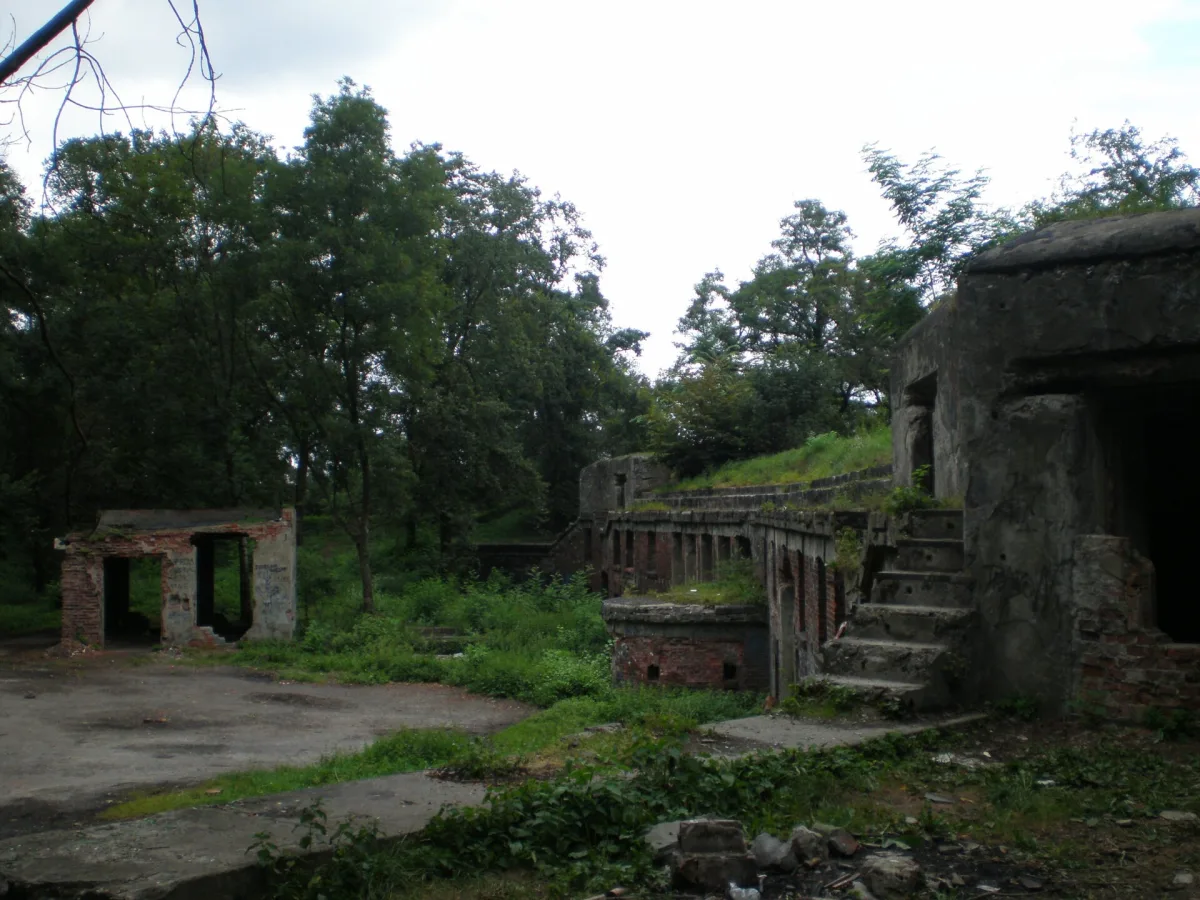
Lasota Hill in Podgórze is part of the limestone Krzemionki Podgórskie. In 1853-1856 Fort 31 Benedykt was built here; earlier a Romanesque rotunda had stood on it, and then the Church of St Benedict. A quarry also operated on the hill, and the Rękawka festival is still held there. During the Second World War the boundary of the Kraków ghetto ran along the northern slope.
Solnik in Dębniki is 259 m above sea level. On the ridge lies a large meadow with xerothermic grasslands, and in good visibility, as Wikipedia states, one can see from it the Beskids, Gorce, the Tatras and the Babia Góra massif. The hill belonged to the Kraków Fortress, Fort 53 Bodzów stands on it, and today it is also a launch site for paragliders.
Kaim Hill in Bieżanów is 265 m above sea level and is built up with single-family houses, so it is more a geographical curiosity than a destination for an outing. On the western slope stands a monument to the fighting of December 1914.
A view of the city can also be had from the terrace on the Small Tower by the royal palace on Wawel.
A mound outside Kraków
The Kościuszko Mound in Olkusz was raised in 1861, on the 44th anniversary of Kościuszko's death, as a miniature of the Kraków mound. The Russians destroyed it during the January Uprising, and a new one was raised in 1917, on the centenary of its patron's death. Today it is 7 metres high, and the cross on top adds another 8 metres.
Be the first! Add a comment.
You need to log in to add a comment.
Log in