
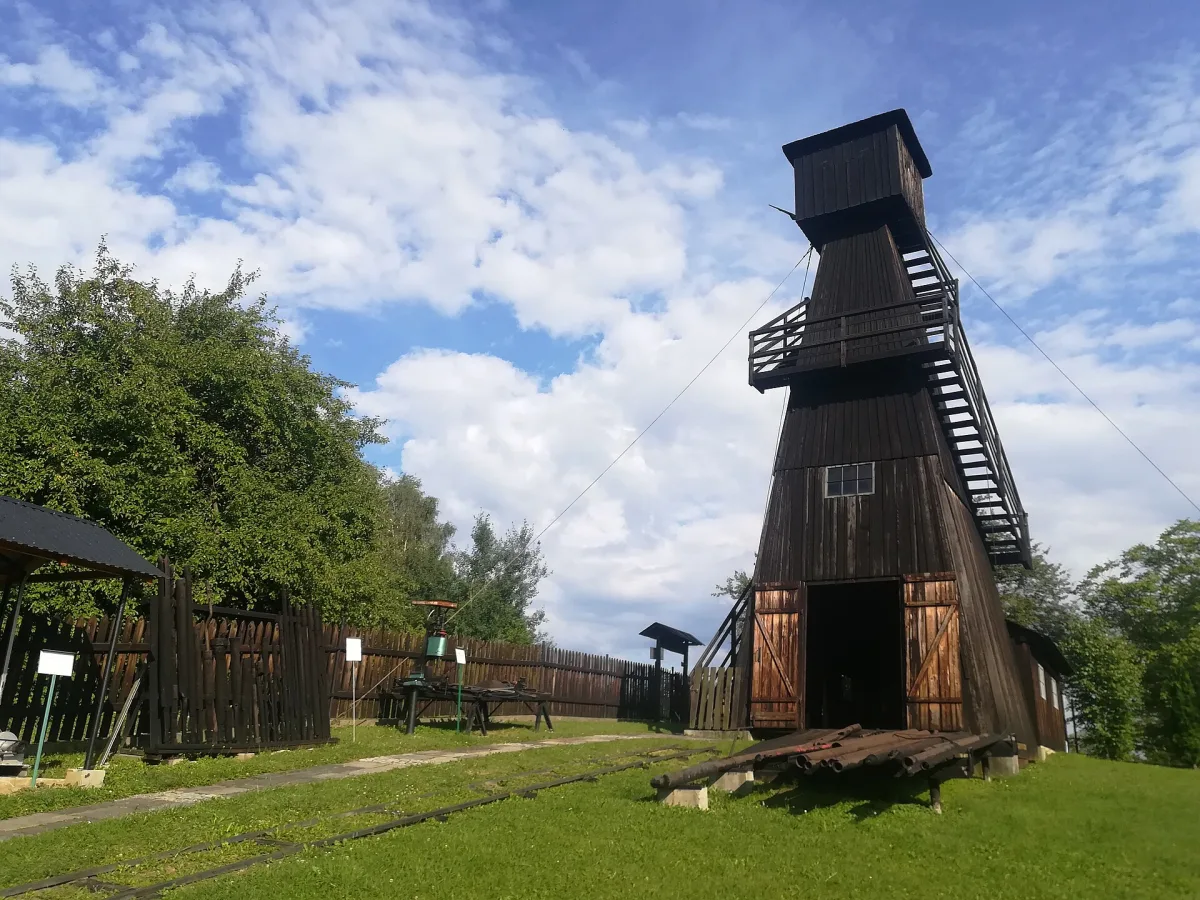
An oil town on the front line
Before the First World War Gorlice was an important centre of the oil industry: from 1877 it was the seat of the National Oil Company in Galicia (Krajowe Towarzystwo Naftowe), and in nearby Glinik Mariampolski a refinery operated from 1883. The beginnings of this story are told in a separate text on Gorlice oil. All that matters here is that the town had an economic momentum which the war interrupted for decades. The memory of the former mine is preserved by the Magdalena Oil Industry Open-Air Museum, opened in 2012.
The front reached the town in the autumn of 1914. According to Visit Malopolska the Russians occupied Gorlice in November 1914, the town changed hands, and finally the Russians captured it again on 27 December 1914 and occupied it for four months, until the battle of 2 May 1915. An account by Bronisław Świeykowski, “Z dni grozy w Gorlicach, od 25 IX 1914 do 2 V 1915” (From the days of terror in Gorlice, 25 September 1914 to 2 May 1915), dates from this period. The operation itself, its forces and course are covered in a separate article on the Battle of Gorlice; here we stay with the town.
What was left after 2 May
On the morning of 2 May 1915 the town came under fire. Świeykowski wrote that “all the houses stood in flames”, and the burning town slowly passed into the hands of the attackers. Visit Malopolska states that as a result of the military operations only several dozen of Gorlice's several hundred buildings survived, and the number of residents shrank from about 7 to 2 thousand. The source does not say exactly what it counts as buildings or what date the first figure comes from, so we treat these data as an order of magnitude, not a census result.
The same portal states that the destruction of the town's property was estimated right after the battle at 20 million crowns, and the Austrian government, which had promised considerable aid, gave the town 300 thousand crowns. Reconstruction therefore fell largely to the residents. The economic losses were more lasting than the buildings: the source writes that Gorlice lost its industrial potential, and its rebuilding took many decades.
Reconstruction still unfinished in 1938
The scale of the reconstruction is best seen in a document from 1938. In the “Memorandum on the most urgent needs of the town of Gorlice” of 18 May 1938 the Town Council wrote to the government of the Republic of Poland that of the total number of houses destroyed by the war about 25 per cent had still not been rebuilt. That is, after twenty-three years a quarter of the destroyed houses were still missing. For comparison: according to Wikipedia in 1931 Gorlice had 6,700 residents, so not much fewer than the roughly 7 thousand from before the battle that Visit Malopolska writes about.
Individual buildings were rebuilt more slowly. The neo-Renaissance Basilica of the Nativity of the Blessed Virgin Mary, built in 1885-1892, was damaged in 1915 and rebuilt in 1921-1932. A similar fate befell the wooden church in Sękowa: according to the site's entry it was devastated at the turn of 1914 and 1915, its timber was used to build trenches and as fuel, and reconstruction was carried out as early as 1918. In neighbouring Szymbark, which in 1914-1915 lay in the foreground of the front and where three soldiers' cemeteries survive to this day, stands the Pogórze Village Open-Air Museum.
Cemeteries: memory on the hill
Within the boundaries of Gorlice there are six First World War cemeteries, numbered 87, 88, 90, 91, 92 and 98. According to Visit Malopolska nearly 1,600 soldiers of different nationalities and faiths lie in them. The largest, cemetery no. 91, is on Korczak hill, called Cemetery Hill (Góra Cmentarna). It was designed by Emil Ladewig, and according to Wikipedia 913 soldiers killed in May 1915 were buried here: 425 Austro-Hungarian, 201 German and 287 Russian. Originally 140 German soldiers lay here, and a further 61 were moved after cemetery no. 89 was closed. The cemetery was also used for burials during the Second World War, and the total number of burials reaches 1,441. It is one of more than 400 West Galician war cemeteries built by the War Graves Section in Kraków.
How museums tell it today
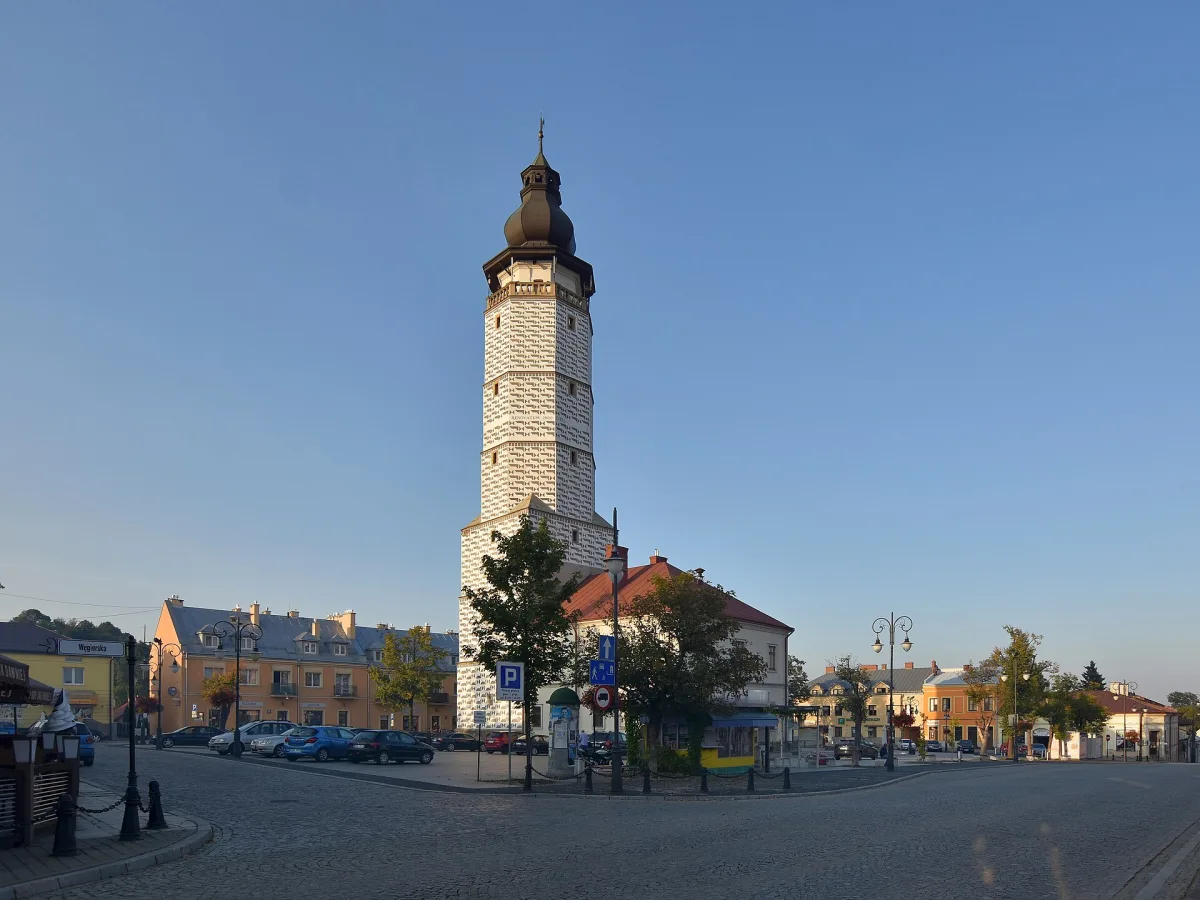
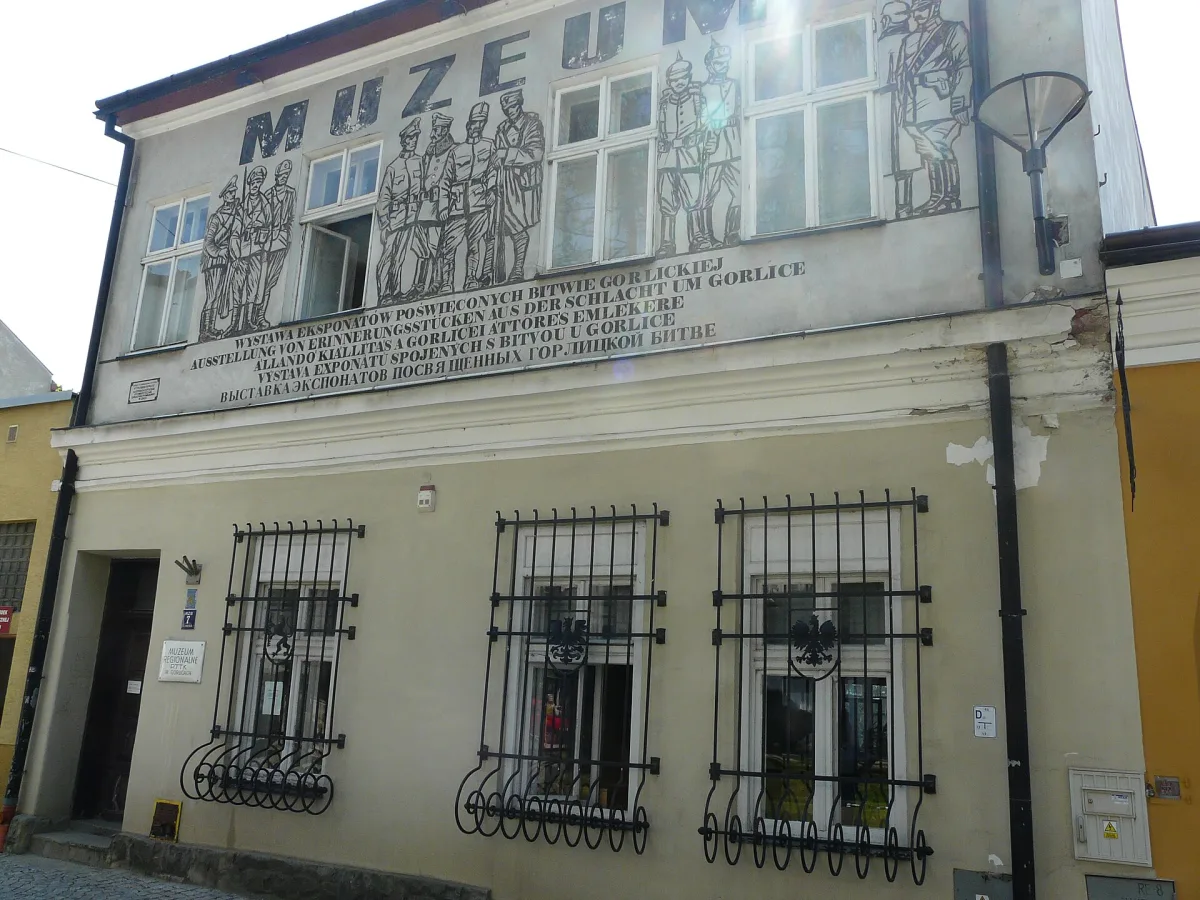
Mementos of the battle began to be collected right after the war. Two exhibitions of war memorabilia, in 1919 and 1935, gave rise to the collections of the PTTK Regional Museum, opened in 1957 in a tenement house from the late 18th century. A permanent exhibition on the Battle of Gorlice has operated there since 1995. A separate institution is the Museum of the Karwacjan and Gładysz Manor Houses, established in 2008. In the revitalised Old Town the Gorlice Town History Pavilion opened in 2013, and on the Market Square stands the Ignacy Łukasiewicz bench monument - a reminder that the town was known for something more than war.
Be the first! Add a comment.
You need to log in to add a comment.
Log in