
Piękny Jaś is the trade name of the runner bean (Phaseolus coccineus), grown on poles in the Dunajec River valley, around Tarnów, Czchów and Zakliczyn. The seeds are white, flattened, kidney-shaped and large: according to the description in the list of traditional products, the mass of a thousand seeds ranges from 1,100 to 1,500 grams, depending on the soil and the course of the weather during the season. The name "fasola Piękny Jaś z Doliny Dunajca" has been protected by European Union law since 2011.
Protected Designation of Origin: what was registered and when
Commission Implementing Regulation (EU) No 1073/2011 of 20 October 2011 entered the name "fasola Piękny Jaś z Doliny Dunajca / fasola z Doliny Dunajca" in the EU register of protected designations of origin. It was published in the Official Journal of the European Union on 25 October 2011. The Lesser Poland Agricultural Chamber, quoting information from the Ministry of Agriculture, notes that it was the next Polish name, after the Zator carp, to be registered as a Protected Designation of Origin (PDO).
A Protected Designation of Origin means that the whole production cycle is to take place in a designated area and that the characteristics of the product result from the conditions there. The application for registration was submitted in 2008. The portal produkty-tradycyjne.pl gives the cooperative "Dolina Dunajca" as the applicant, and in the data of the producer group the Association "Dolina Dunajca", based in Zawada Lanckorońska, is entered. Earlier, on 28 November 2006, the seeds of the "Piękny Jaś" bean were placed on the list of traditional products of the Ministry of Agriculture and Rural Development (as Wikipedia states, citing the ministry's list).
Municipalities where the bean with the designation may be grown
Cultivation of the bean with the protected designation is permitted in eleven municipalities of Lesser Poland. According to the list cited in Wikipedia these are: Czchów, Gręboszów, Gródek nad Dunajcem, Pleśna, Radłów, Tarnów (rural municipality), Wierzchosławice, Wietrzychowice, Wojnicz, Zakliczyn and Żabno. It is a belt along the middle and lower course of the Dunajec, from Gródek and Czchów downstream, through Tarnów and Wojnicz, to Żabno.
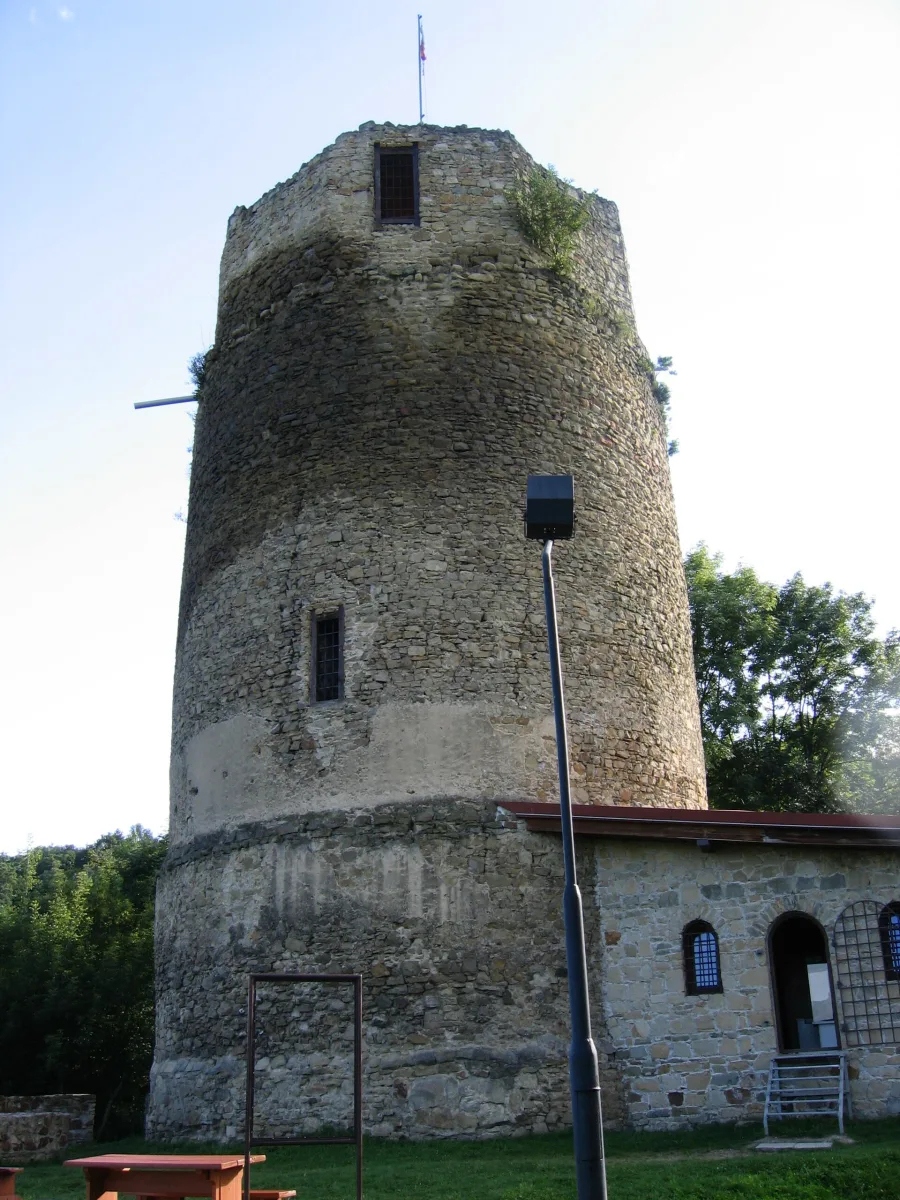
The valley has also left its mark in historic monuments. By the river stand the ruins of the castle in Czchów, formerly with a customs post guarding the trade route, and the castle in Gródek nad Dunajcem. In Zakliczyn municipality lies the castle in Melsztyn, and in Żabno the town hall. All four places lie within the area from which the bean comes.
What sets this bean apart according to the product description
Information from the Ministry of Agriculture, repeated by the Lesser Poland Agricultural Chamber, lists several features: the large size of the seeds, a high magnesium content, a sweetish taste, a delicate, melt-in-the-mouth texture, a thin and soft skin and a short cooking time. Wikipedia adds that the magnesium is supposed to come from the local soil, which is rich in this element. These are features declared in the application and in official descriptions, not research results that we are citing.
The reasons are put down to the conditions of the valley. The Dunajec shaped a wide, terraced valley, regarded as one of the warmest places in Poland. In spring and autumn morning mists soften the differences in temperature between day and night, and floods deposited fertile river silt on the fields. To this is added the low strength of the wind, important for a plant climbing on poles.
"Walking pea" and bean festivals
The portal produkty-tradycyjne.pl writes that the valley has been famous for growing beans for more than a hundred years and that residents long called it "groch piechotny" (walking pea). This last name appears there as the only source, so we treat it as a local term passed on by the product description, not as a settled linguistic fact. On the same page we find information that the cultivation was important enough to the region for the Union of Bean Municipalities of the Dunajec Valley to be formed. The plantations are said to lie on small farms, with cultivation methods passed down from generation to generation.
Wikipedia, citing the publication "Zasmakuj w Małopolsce. Produkty regionalne" (Taste Lesser Poland: Regional Products), writes that the Dunajec valley is the only region of Poland where pole beans are still grown on a large scale. This claim has a single source and should be read as the opinion of the authors of that publication. It is known, however, that events are organised around the bean: the Lesser Poland Agricultural Chamber mentions them, calling them the "Bean Festival" and the "Bean Harvest".
The bean in the kitchen
According to Wikipedia, Piękny Jaś is used locally to make soups, pâtés, roulades, filled dumplings, cakes and tortes, as well as bean sausage and bean-based vodka. The list comes from a single study and describes possibilities, not an established canon.
Be the first! Add a comment.
You need to log in to add a comment.
Log in