 Theatre
 Theatre
 Theatre
 Theatre
 Theatre
 Theatre
 Theatre
 Theatre
 Theatre
 Theatre
 Theatre
 Theatre
 Theatre
 Theatre
 Theatre
Plays in Kraków and Lesser Poland: over 180 theatre events, from national stages to puppet theatres, including Stary Teatr and Teatr Solskiego.
You will find productions for adults and children, comedies, dramas, improvised shows and retransmissions from foreign stages. Over 60 events take place in Kraków, and the rest are spread across the region's towns, so theatre is available outside the capital of Lesser Poland too.
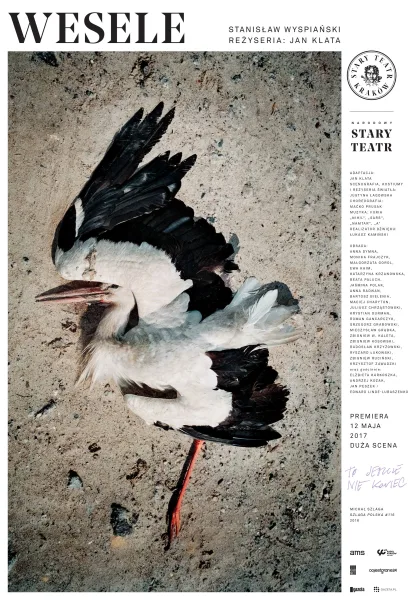
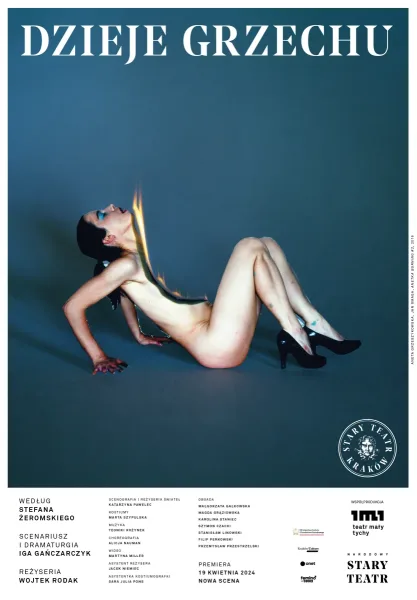
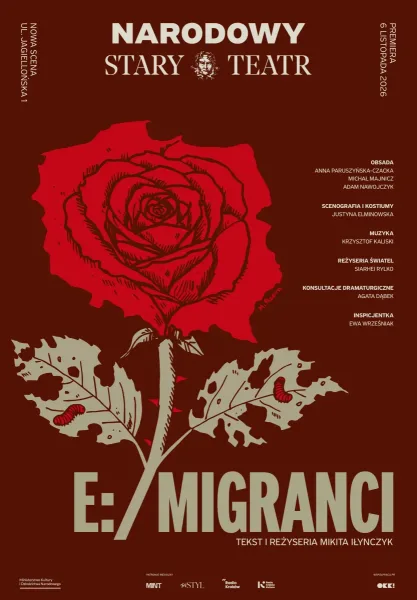
The most theatre events in Kraków belong to the Helena Modrzejewska National Stary Teatr, which appears in the calendar with three stages: the New Stage (9), the Chamber Stage (6) and the Large Stage (6). Next are Lastriko (7), Teatr Cabaret (6) and Nowohuckie Centrum Kultury (5). Teatr Kto, Teatr Variété and Teatr Przypadków Feralnych have three events each, and Teatr Ludowy, Teatr Bagatela and the Pod Jaszczurami club two each.
Stary Teatr is a national stage, and its three halls let you choose the scale: from a spectacle on the large stage to an intimate play with a few dozen spectators close to the actors. Lastriko, Teatr Kto and Teatr Przypadków Feralnych are smaller stages where the audience sits close to the actors. The Interactive Museum Centre for Theatre Education in Kraków, meanwhile, hosts events for families and schools.
Start with the kind of evening you need. Titles and descriptions in the calendar let you quickly tell light comedies from ambitious dramas, and organisers usually state whether a show is for adults.
No, and that is good news for residents of the region. More than 110 theatre events take place outside Kraków. Most are in Tarnów: the Ludwik Solski Theatre has 12 events there, the Paderewski School of Music 6, and the Youth Palace hall one. In Nowy Sącz plays are presented by the Municipal Centre of Culture (about 12 events in total), in Nowy Targ by the Municipal Culture Centre (10) and in Rabka-Zdrój by Teatr Lalek Rabcio (9).
Smaller towns have a calendar of their own: Wolbrom (7), Dobczyce (6), Oświęcim (6), Myślenice (5), Brzesko (5), Gorlice (4), Chrzanów (4), Trzebinia, Maków Podhalański and Zakopane (3 each), Olkusz, Mszana Dolna, Sucha Beskidzka, Limanowa and Chełm (2 each). In such places plays are often staged in community centres, where tickets cost less and the audience is more family-oriented.
In Tarnów the choice is largest, because there is a theatre with its own company and two music halls. In Nowy Sącz and Nowy Targ plays take place in municipal culture centres, and in Rabka-Zdrój the speciality is puppets. Podhale and the Beskids have several stages in community centres, and the Zagłębie area and the surroundings of Chrzanów have local centres.
Many plays are touring productions: the same show plays in several towns over a few weeks. If you cannot reach Kraków, check neighbouring towns; they are often an hour apart. Before you set off, make sure you can get back, because evening transport in smaller towns is limited.
Arrive a quarter of an hour early so you can take your seats and leave your coat in the cloakroom without rushing. Theatres do not admit latecomers after the start, or only at the interval, so being late can mean missing half the play. Dress does not have to be formal, but should be neat and comfortable, because a play usually runs two hours or more.
Before the theatre, eat in one of the places in the restaurants section, and after the play drop into one of the places with character near the venue. On the day before it is worth visiting a museum or strolling among historic sites if you are staying in town longer. A fuller overview of institutions in this field is in the list of theatres and opera.
For premieres, shows with star casts and weekend dates, buy tickets in advance, because theatre halls are smaller than concert venues and seats run out quickly. For lesser-known titles and on weekdays you can often find seats on the day. At small stages such as Lastriko or Teatr Kto the number of seats is limited to a few dozen, so booking is almost a must.
When choosing a seat, remember that in large halls the best sound and view are in the middle rows, while on small stages even the second row gives close contact with the actors. If you go with an older person, choose a seat by the aisle, and with a child nearer the exit. Ask the organiser about accessibility for people with limited mobility before you buy tickets, because not all old buildings have lifts.
Theatre in a smaller town is a good reason to see it during the day. In Tarnów, before an evening play you can see the historic old town and then have dinner near the theatre. In Rabka-Zdrój a children's show fits a day in the spa part of town, and in Nowy Sącz a walk around the square and its surroundings.
Many viewers travel to neighbouring towns for plays when their favourite production does not play at home. If you plan such a trip, choose a play that starts early in the evening, so that you do not return after midnight. After an event in a small town, check whether the local restaurant is open afterwards, because not everywhere can you eat after ten in the evening.
Silence your phone before the start and do not take photos during the play unless the organiser clearly allows it. Coughing and the rustle of wrappers disturb others in the quiet the actors tune their scenes to, so bring only what you need. Applause comes at the end, and at a musical also after individual numbers if the audience reacts that way.
At interactive shows or those with audience participation, be ready for jokes: the actors may speak to a viewer from the front rows. If you do not want to take part, sit further from the stage or at the side. In alternative theatres, in clubs and in unusual venues the rules can be looser, but respect for other viewers applies everywhere.
Yes, it is a tradition of its own. The calendar includes puppet shows, interactive productions and events at the Interactive Museum Centre for Theatre Education. For younger children running time matters: choose short plays, up to an hour, with or without an interval.
A fuller offer for the youngest is in the category of events for children. If you want to see what else is going on, look at concerts, cabaret and cinema, and for an overview of the region see the events calendar.
For a date or an anniversary, romantic comedies and dramas about relationships work well, and after the play leave time to talk. With parents or grandparents, choose a classic or a comedy with a star cast, for which tickets are easy to buy and the venue easy to reach. With a group of friends, shows with audience participation and improvised theatre are a safe choice.
If you have not been to the theatre in a long time, start with a short, light play on a smaller stage. Those who like something unusual will find alternative theatre in clubs. When the weather ruins your plans, the theatre is one of the best options from the list of attractions for rainy days.
The National Stary Teatr has the most, playing on the New Stage, the Chamber Stage and the Large Stage. Next are Lastriko, Teatr Cabaret and Nowohuckie Centrum Kultury. Smaller theatres, such as Teatr Kto or Teatr Przypadków Feralnych, offer an intimate meeting with the actors.
Yes. Most events are in Tarnów, Nowy Sącz, Nowy Targ and Rabka-Zdrój, but smaller towns stage plays too, from Wolbrom to Zakopane. More than half of the events take place outside Kraków.
The easiest start is a comedy or a musical show, which do not require background knowledge. If you prefer drama, choose a large stage, where you see everything and do not have to sit close to the actors.
Yes, puppet and interactive shows, in Rabka-Zdrój and in Kraków among others. The age information is in the event description. For the youngest, short forms are better.
Productions for adults usually last from an hour and a half to three hours, often with an interval. The organiser gives exact information in the description. Plays for children are shorter.
It is a screening of a recording or broadcast of a production from another stage in a cinema or cultural hall. It lets you see opera or theatre from abroad without travelling. Such events usually have a single date.